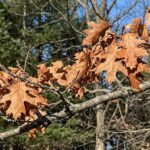

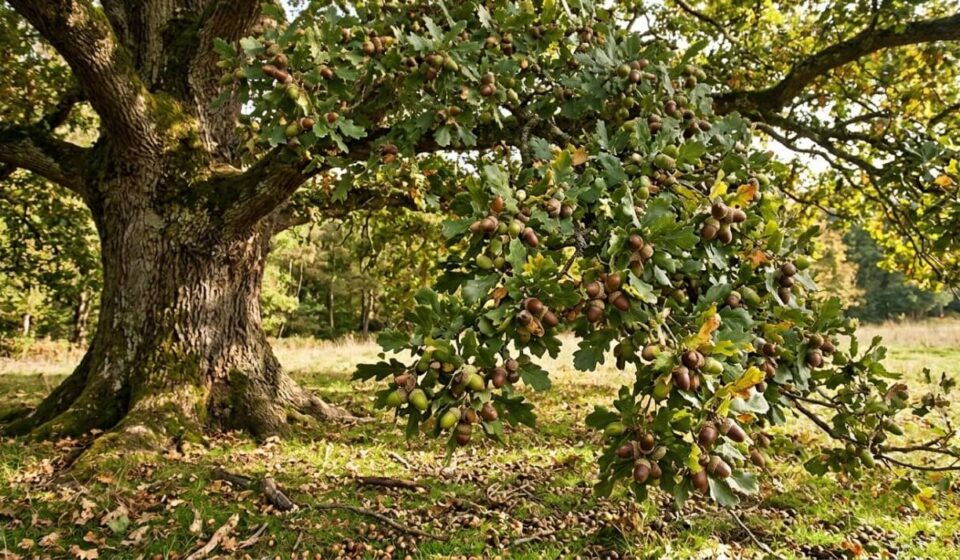
An oak tree can produce a modest number of acorns one autumn and cover the ground with thousands the next. During particularly productive years, sidewalks become difficult to walk across, squirrels have more food than they can collect, and homeowners may find themselves raking up acorns almost every day. The difference can be remarkable, even between two mature oaks growing on the same property.
A large oak can produce 10,000 acorns in a single mast year, according to Penn State’s forestry research resources. Mast years occur when oak populations produce unusually abundant seed crops, often after several years of lower production. The cycle commonly spans two to five years, although the frequency depends on the species and local conditions.
How Many Acorns Can One Oak Actually Produce?
Ten thousand is a reasonable figure for a large, productive oak, but it is certainly no upper limit.
Virginia’s Extension Master Gardeners documented a 69-year-old white oak that produced more than 23,000 acorns in one year. The quantity depends heavily on the tree’s age and crown development, but this is not the only thing oak tree will do, as it can also keep dead leaves. Mature oaks with broad, well-exposed canopies generally have greater reproductive potential than smaller trees beneath a dense forest canopy.
During exceptionally productive years, oak forests can produce more than 250,000 acorns per acre. The University of New Hampshire Extension estimates that poorer years may yield only 20,000 to 65,000 acorns per acre.
That difference explains why an area with relatively few acorns one autumn can appear completely covered the following year.
Still, a heavy crop on one tree does not automatically establish that an entire region is experiencing a mast year. The term generally describes unusually abundant, often synchronized seed production across a population.
Why Do Oaks Produce So Many Acorns at Once?
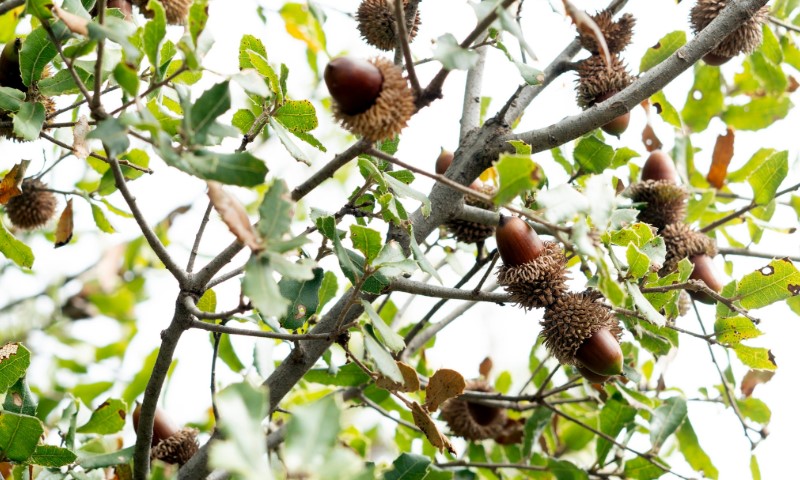
Oak reproduction depends on successful pollination and the resources available for seed development. Weather conditions during flowering can have a substantial effect on the crop that eventually reaches the ground.
Oaks produce male and female flowers on the same tree. Pollen travels through the air, and unfavorable spring weather can reduce fertilization. Late frosts may damage developing flowers before a substantial crop can form.
Research published in Ecology Letters identified pollen availability as a major factor behind synchronized acorn production. The researchers combined long-term pollen records with observations of acorn crops and found that weather affects how much pollen becomes available.
However, the exact causes of mast years remain difficult to predict. Trees also allocate considerable resources to reproduction, and unusually heavy crops may be followed by periods of reduced production.
White Oaks and Red Oaks Have Different Timelines
One important detail is often overlooked: the two major oak groups mature their acorns on different schedules.
How acorn development differs between oak groups
| Oak group | Acorn maturation | What affects the autumn crop |
| White oak group | One growing season | Spring pollination and weather during the current year |
| Red oak group | Two growing seasons | Conditions across two growing seasons, including the previous spring |
Development periods are documented by Mississippi State University Extension.
A northern red oak may therefore produce a strong autumn crop despite unfavorable flowering conditions earlier that same year, because its mature acorns began developing the previous spring.
The distinction also explains why neighboring red and white oaks may have dramatically different harvests.
Why Does Producing Thousands of Acorns Help Oaks Survive?
View this post on Instagram
Acorns are an important food source for wildlife, and enormous quantities disappear before they have any chance to germinate.
During an ordinary year, animals may consume nearly the entire crop. A mast year changes the situation because the available food can exceed what local wildlife populations can eat or store.
Botanists call the proposed advantage predator satiation.
By producing unusually large numbers of seeds at intervals, oak populations can increase the chances that some acorns survive long enough to establish new seedlings.
A 24-year ecological study of Appalachian forests found that greater acorn production was associated with increased rodent abundance the following year. Such changes can also influence predators and other wildlife.
Mast years may therefore have consequences that continue well beyond the autumn acorn drop.
Does a Heavy Acorn Crop Predict a Harsh Winter?
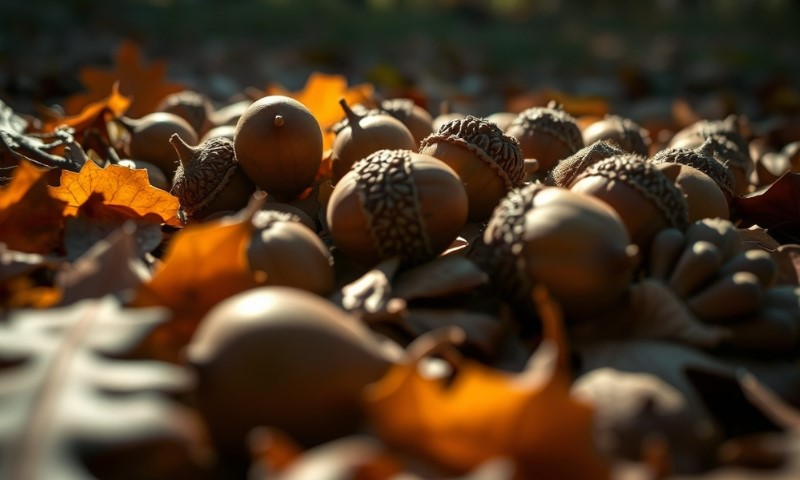
No. The number of acorns beneath an oak cannot reliably predict how cold the next winter will be.
The New York Botanical Garden specifically rejects the popular claim that unusually abundant acorns indicate a severe winter ahead.
Acorn crops reflect reproductive conditions that developed over previous months or years. A large harvest in October provides no reliable information about January temperatures.
The timing of reproduction also varies enough between oak species that a simple rule would be misleading.
Will the Oak Produce Another 10,000 Acorns Next Year?
Probably not, although exceptionally productive trees can produce substantial crops in consecutive years.
Most oak species experience periodic increases and decreases in seed production. The intervals vary, and even mature trees of the same species can differ significantly.
A particularly useful finding comes from research published by Missouri Extension: only about 30% of large, healthy white oaks produced any acorns during some otherwise favorable crop years. Tree size alone cannot guarantee a heavy harvest.
For homeowners, an extraordinary number of acorns is generally evidence of a productive reproductive season rather than a tree-health problem.
The quantity may be inconvenient beneath a driveway, but it supports wildlife and creates opportunities for new oaks to establish. A mature tree can produce thousands of acorns without any special intervention, then return to a much smaller crop the following autumn.
There is no reliable way to schedule the next mast year. The best approach is to keep the oak healthy, allow sufficient space for its mature crown, and accept that some autumns will require a considerably larger rake.