

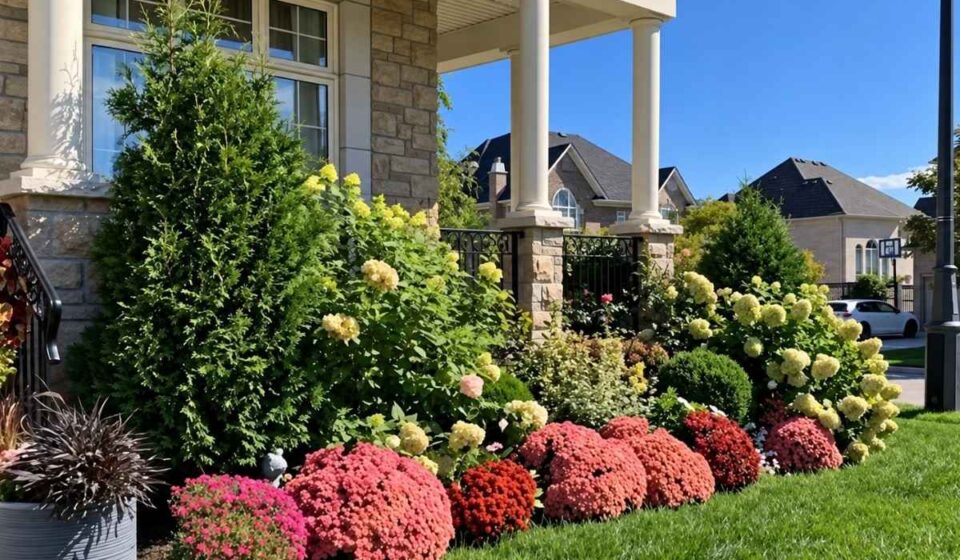
About ten years ago, when I was still learning how to run our family nursery, I bought several ornamental shrubs that our supplier at the time hadn’t managed to sell.
The price was good enough for me to accept the offer, although I wasn’t sure how much our customers would like them. I took a few shrubs home and planted them in front of my house.
Today, ten years later, some of those shrubs still look excellent, but I’ve already had to replace other plants that I chose much more carefully.
If you’re looking for ornamental shrubs for the front of your house that will still look good in ten years, I recommend Gem Box inkberry, Little Lime hydrangea, dwarf fothergilla, and Tiny Wine ninebark.
Here’s What Matters When Choosing Shrubs Like These
- Choose compact shrubs whose mature height won’t block your windows or front entrance.
- Combine evergreen and deciduous shrubs for an attractive appearance throughout the year.
- Check the amount of direct sunlight before choosing shrubs for the space along your house.
- Leave enough room for mature shrubs to avoid excessive pruning.
- Pay special attention to water and root development during the first two years.
Four Ornamental Shrubs I Would Plant in Front of My Own House
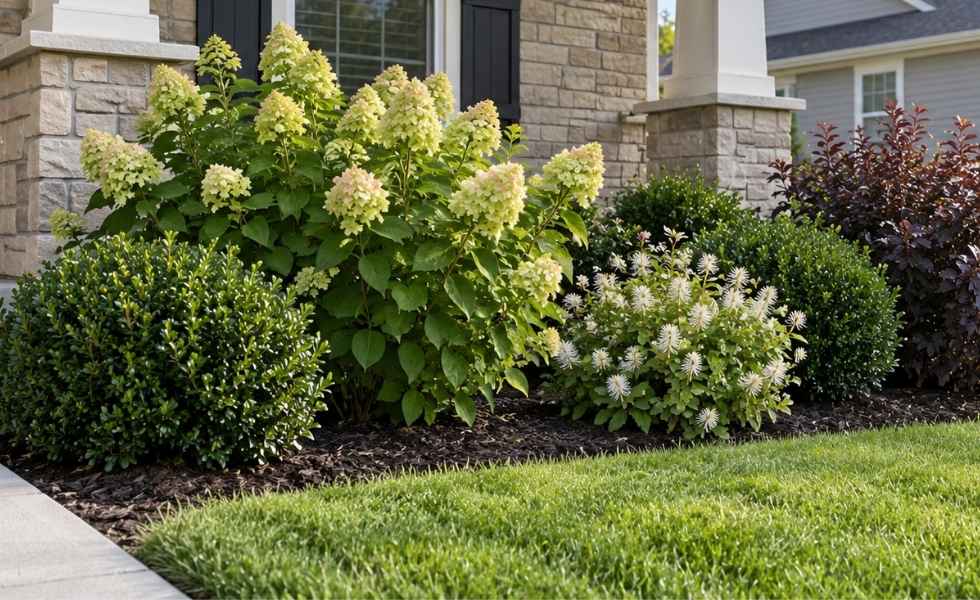
For homes in Ohio and other areas with similar climates, I would choose the following four shrubs.
| Ornamental Shrub | Mature Height and Width |
| Gem Box inkberry (Ilex glabra) | 2–3 feet tall and wide |
| Little Lime hydrangea (Hydrangea paniculata) | 3–5 feet tall and wide |
| Dwarf fothergilla (Fothergilla gardenii) | Approximately 3–6 feet tall and wide |
| Tiny Wine ninebark (Physocarpus opulifolius) | 3–5 feet tall and 3–4 feet wide |
The dimensions represent the expected mature size of each plant. Actual growth depends on the cultivar and local conditions.
Gem Box Inkberry Is Suitable If You Have Low Windows
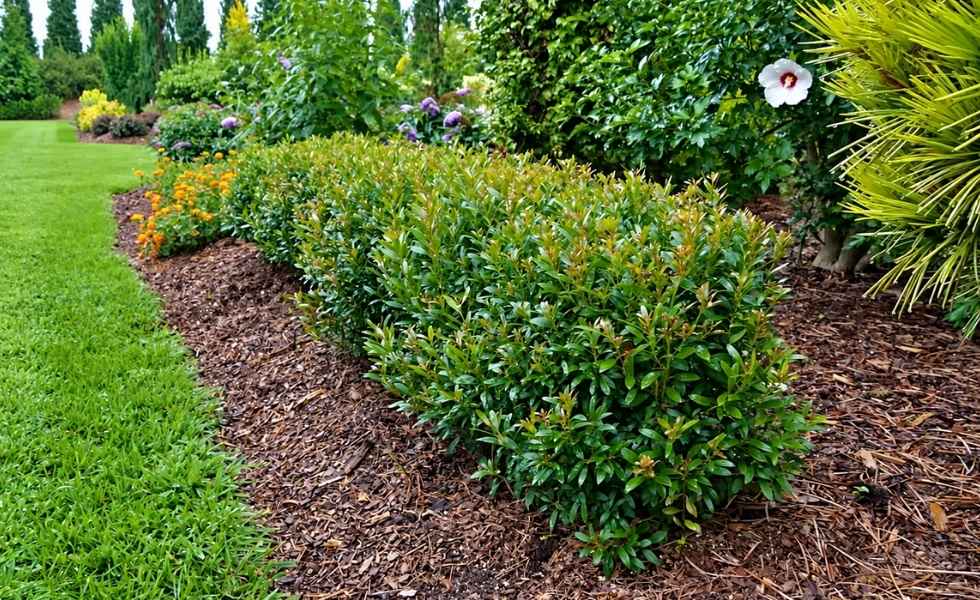
I recommend Gem Box inkberry when customers want low evergreen shrubs beneath their windows. Its small, dark green leaves and naturally rounded shape make it particularly suitable for such locations.
Gem Box is a compact cultivar of the North American species Ilex glabra. According to Proven Winners, a mature plant reaches approximately 2–3 feet in height and a similar width. Its branches remain dense even near the base, which is particularly useful for low hedges.
Gem Box is one of the alternatives to traditional boxwood worth considering. It isn’t susceptible to box tree moths, but it prefers acidic soil and good drainage. Its leaves may turn yellow in highly alkaline soil.
Little Lime Hydrangea With a Long Flowering Season
The original Limelight hydrangea can reach approximately 6–8 feet in height. Little Lime is its more compact version, with a mature height and width of approximately 3-5 feet.
Its flowers are initially greenish, become lighter during summer, and often develop pink shades toward the end of the season. It produces flowers on new wood, so proper pruning in late winter or early spring won’t remove flower buds formed during the previous season.
Dwarf Fothergilla With Ideal Fall Colors
Pay attention to the particular variety. Dwarf fothergilla generally grows more slowly than larger cultivars, but its mature dimensions aren’t always the same. For example, Mt. Airy can reach approximately 6 feet in height, so it wouldn’t be my first choice for a narrow garden bed.
Tiny Wine Ninebark With Dark Burgundy Foliage
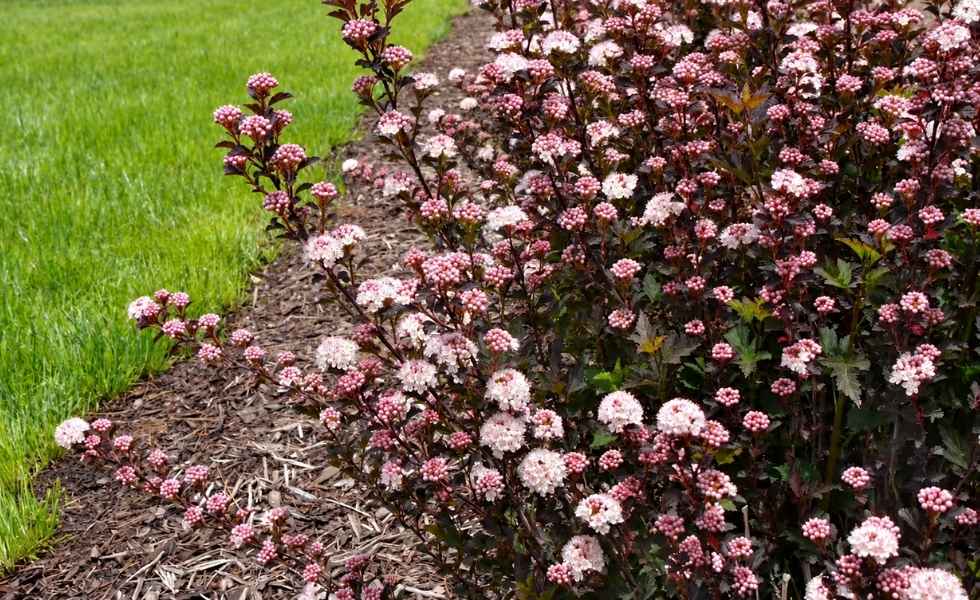
Tiny Wine (Physocarpus opulifolius) has dark burgundy foliage and pale pink flowers that appear in late spring. Its dark leaves are particularly noticeable against lighter-colored house exteriors.
At our nursery, I recommend this variety when customers want deciduous shrubs that remain attractive even after their flowers fade. The dark foliage remains its greatest advantage throughout most of the growing season.
How Would I Arrange Shrubs in Front of a House?
Imagine a typical American family home with two windows facing the street and a central entrance. There’s a garden bed approximately 6.5 feet deep along the front of the house.
For symmetrical houses, I usually recommend repeating the same shrub variety on both sides of the entrance. For example, several Gem Box specimens could form a low hedge beneath the windows.
I wouldn’t insist on a perfectly symmetrical arrangement if one side of the house receives significantly less sunlight.
Two different cultivars of similar size may be more suitable than two identical plants exposed to completely different conditions. Another piece of advice I often give customers is to leave some empty space during the first year. Young shrubs need time to develop their crowns.
The gaps you see today may disappear completely in three or four years.
Questions Customers Often Ask Me
Is It Better to Buy Large or Small Shrubs?
For long-term landscaping, I would rather choose a healthy young shrub with a well-developed root system than a much larger plant whose roots are restricted or damaged. Larger shrubs have an advantage if you want your yard to look established immediately. However, don’t assume that a large plant will always resume growth more quickly after transplanting.
Which Shrubs Keep Their Leaves During Winter?
Compact evergreen cultivars of inkberry are a good choice for many parts of the eastern United States. Boxwood can also be suitable, but check the local prevalence of its diseases and pests before purchasing it.
Can I Plant Hydrangeas on the North Side of My House?
It depends on how much direct sunlight the location receives. Little Lime can grow in partial shade, but deep shade generally isn’t a suitable location for abundant flowers. Before purchasing, I would spend a day checking how many hours of direct sunlight reach the intended planting area.
Conclusion
For the front of a house, I would choose compact shrubs whose mature dimensions suit the available space. A combination of low evergreen shrubs and several carefully selected flowering shrubs can look attractive throughout much of the year. If I were to landscape the area in front of my house again today, I would measure the width of the garden bed and the height of the windows first.