
A few days ago, I remembered a lecture from my college days when our professor explained why some shrubs fail to bloom for years, even though they look perfectly healthy. Out of curiosity, I decided to look up a few of my old professors on Facebook.
I found one who had taught us about ornamental trees and shrubs, and then I remembered a book he had recommended to us back then.
After rummaging through my shelves, I found my old copy of Manual of Woody Landscape Plants by Michael Dirr, professor emeritus of horticulture at the University of Georgia.
I reopened the chapters on flowering shrubs and recalled one of the most important rules I learned in college. If you want to trim bushes without losing next year’s flowers, prune shrubs that bloom on old wood immediately after flowering, and those that bloom on new growth in late winter or early spring.
I also sent a photo of the book to a former college classmate, with whom I still occasionally work on residential landscaping projects.
We both remembered how much time we had spent studying botanical names and drawings of buds, trying to identify plants without their leaves.
Here are a few things I would highlight if you don’t have time to read the entire book:
- Pruning time: Prune spring-flowering shrubs after they bloom, and summer-flowering shrubs generally in late winter.
- Flower buds: Check which branches produce flower buds before you pick up your pruning shears.
- Selective pruning: Remove old and damaged branches instead of trimming the entire shrub evenly.
- Differences between varieties: Pay particular attention to hydrangeas, as not all varieties bloom on the same type of growth.
- Gradual rejuvenation: Prune older shrubs over several seasons to preserve some of their flowers.
Why Can You Lose Flowers if You Prune Shrubs at the Wrong Time?
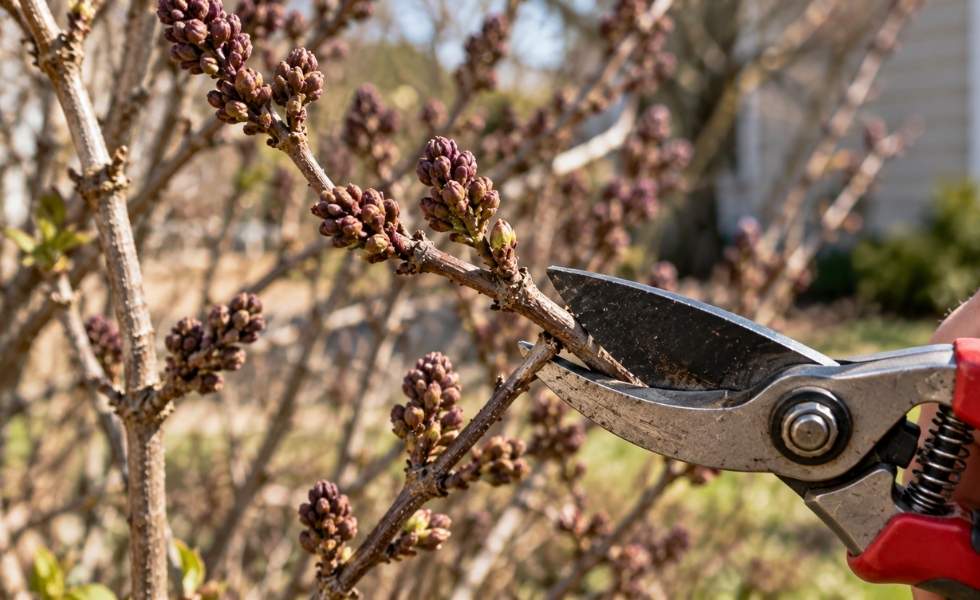
One of the first things I revisited in Dirr’s book was the descriptions of buds and one-year-old shoots. The fifth edition of his manual contains information on more than 1,600 species and 7,800 cultivars.
I remembered an important lesson from college: the flowering period is not the same as the period when flower buds form.
Many spring-flowering shrubs develop their buds during the previous summer, so fall pruning can remove flowers that would otherwise open the following spring.
The same timing matters when choosing shrubs for winter flowers, such as witch hazel, which can bloom while many other plants are still dormant
For example, lilacs and forsythias bloom on old wood. If you trim them evenly in September, you will probably remove some of next year’s flowers.
Panicle hydrangeas are different because they produce flowers on new growth.
How to Prune Shrubs Properly and Preserve Their Flower Buds
Trimming every branch to an even height can remove far more flower buds than necessary.
First, Identify the Branches That Actually Need to Be Removed
When I work on a mature shrub, I start by examining its interior. Older stems that have lost some of their lateral shoots are usually found there, along with branches that cross one another.
I follow a simple sequence:
- I remove completely dead and severely damaged branches.
- I identify branches that cross one another and remove those with the less favorable position.
- On older shrubs, I remove some of the oldest stems just above ground level.
- I shorten excessively long, healthy branches to a suitable lateral shoot, but only when necessary.
- After making a few cuts, I step back from the plant and check its shape.
In college, we were taught that there should be a clear reason for every branch we remove. Good advice, especially when working with plants that have already developed flower buds.
When shortening a thin twig, I make the cut approximately 6 mm above a healthy bud. When removing an entire branch, I take care not to damage the swollen area at its base.
Preserve the Natural Shape and Avoid Excessive Pruning
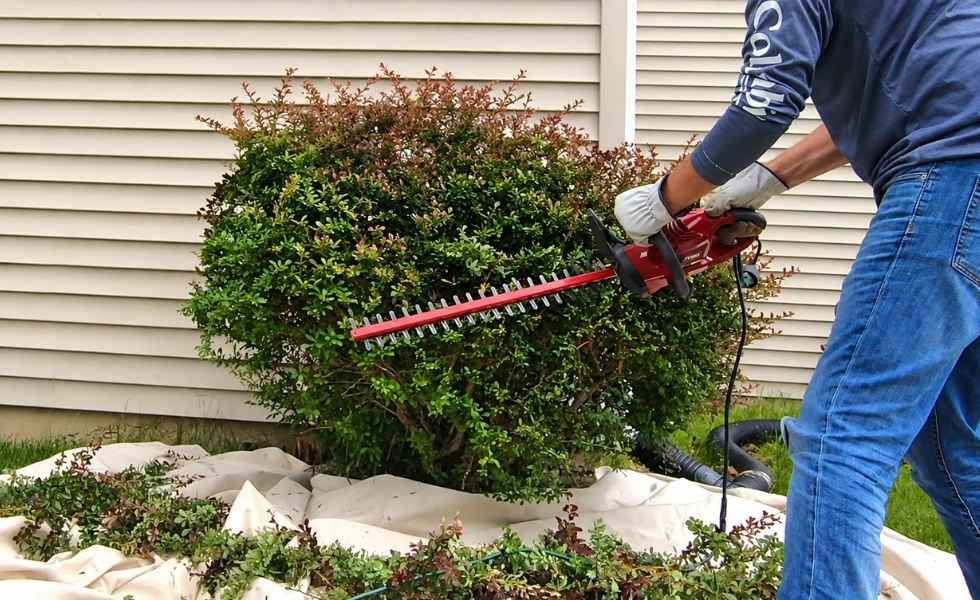
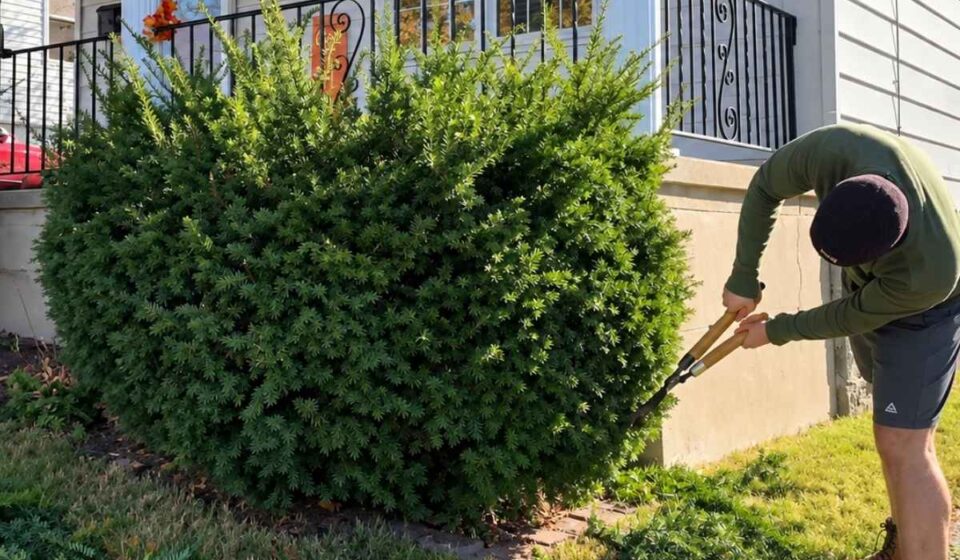
Electric hedge trimmers are excellent for maintaining formal hedges. However, when used on flowering shrubs, they often remove a large number of healthy branch tips regardless of where the flower buds are located.
After several seasons of such pruning, the outer part of a shrub can become extremely dense. Interior branches then receive less sunlight, and the development of new shoots near the base can become considerably weaker.
Instead of trimming every branch evenly, I prefer removing a few of the oldest stems. With forsythia, for example, that approach preserves its naturally arching shape.
I am particularly careful with hydrangeas. Traditional bigleaf hydrangeas generally bloom on old wood, whereas panicle hydrangeas produce flowers on new growth.
What if You Missed the Right Time to Prune?
A few years ago, a homeowner asked me to take a look at his old lilac. The shrub was almost three meters tall, with very few young shoots near its base.
He wanted to reduce its size considerably but wasn’t prepared to give up the following spring’s flowers. I remembered a lecture on gradual rejuvenation, so I suggested that we spread the work over three years.
During the first season, we removed approximately one-third of the oldest stems. The remaining stems continued to flower, and the new shoots had more room to grow.
A similar approach is recommended by Iowa State University in its guide to pruning overgrown shrubs.
For spring-flowering plants, gradual rejuvenation can help preserve some of the following year’s flowers. What if you’ve already pruned your shrub in the fall?
Don’t try to correct the mistake by cutting it back further. If the plant is healthy, allow the remaining branches to flower the following spring. During the next growing season, new shoots can develop buds for the following year.
When Should You Prune the Most Common Flowering Shrubs?
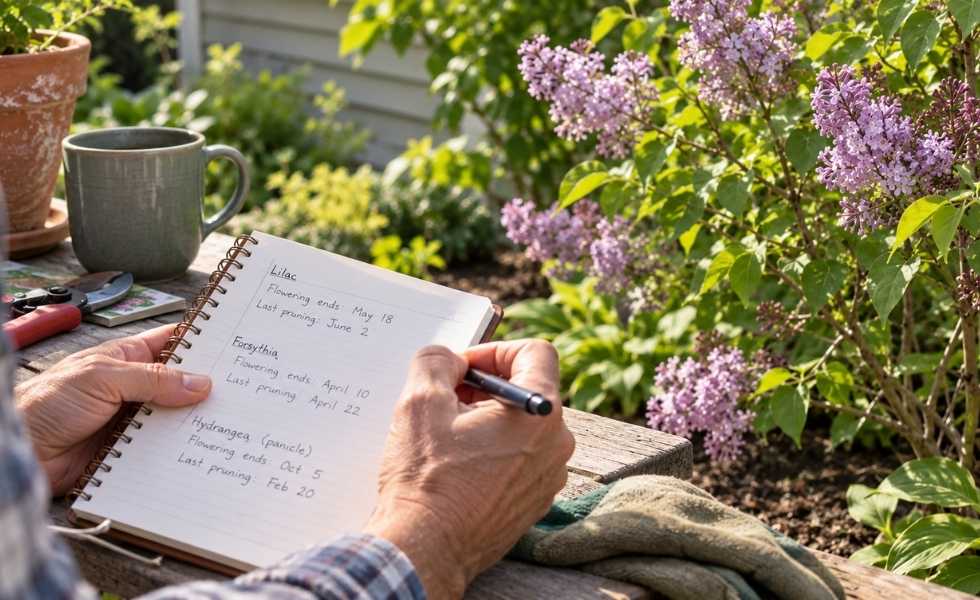
Back in college, I started recording the flowering dates of the plants we studied. Today, I keep somewhat more detailed records. For each plant, I note the approximate date when flowering ends and the date of its last major pruning.
The table below shows the recommended pruning periods.
| Shrub | Seasonal Window | Best Time to Prune |
| Lilac | Late spring, once the main flower show is over | Prune soon after the spring flowers fade |
| Forsythia | Mid to late spring, after the yellow blooms disappear | Cut it back once flowering is finished |
| Azalea | Late spring to early summer, shortly after bloom | Give it a trim soon after the flowers fade |
| Rhododendron | Late spring or early summer, once flowering ends | Prune after flowering, and only if it really needs it |
| Bigleaf hydrangea | Summer, after the main bloom period | For traditional varieties, wait until the flowers have finished |
| Panicle hydrangea | Late winter to early spring, before fresh growth takes off | Prune before strong new growth starts |
| Smooth hydrangea | Late winter or the first part of spring | Prune before the shrub puts on much new growth |
| Summer-flowering spirea | Late winter to early spring, before the growing season gets busy | Cut it back before the new season gets underway |
What Conclusions Have I Reached?
When I reopened Dirr’s book, I realized how often I still use the knowledge I gained back in college.
After more than 15 years of working with ornamental plants, I still check when a particular species develops its flower buds before I pick up my pruning shears.
My advice is not to rush into pruning just because a particular month has arrived. Identify the shrub species and remove only the branches that have a good reason to be removed.
If you’re not sure it’s the right time, wait. A few weeks of patience can save next spring’s flowers.