
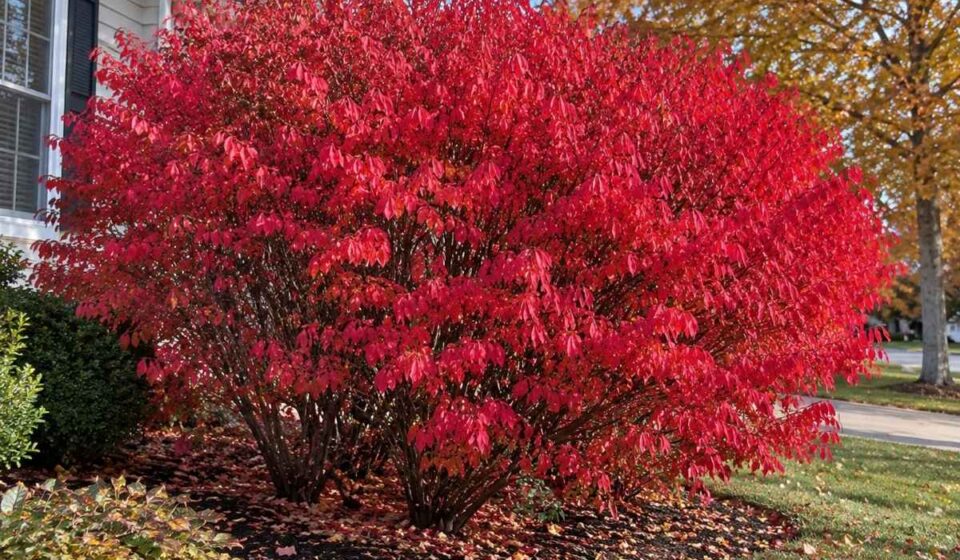
Last fall, I was making a list of shrubs I wanted to order for the next season when I noticed that burning bush was no longer available from a supplier I had worked with for years.
I thought it was a stock issue, so I sent him a message and asked when he expected the next shipment.
His answer was much shorter than I expected. They had no plans to order more for several states because the sale of Euonymus alatus was banned or restricted there, and new regulations had only made distribution more complicated.
If you wanted burning bush primarily for its bright red fall color, there is no reason to give up on that effect in your yard. Red chokeberry, Virginia sweetspire, dwarf fothergilla, and highbush blueberry can all take its place, and each is suited to a slightly different space.
Those are exactly the four plants I would show a customer who came to my nursery today and asked what to plant instead of burning bush. My supplier’s answer made me look a little differently at a plant I had long considered an ordinary part of my fall inventory.
Burning bush certainly looks spectacular in October, but its ability to spread beyond residential yards presents a real problem.
What I Found Out!
- Burning bush is already banned or restricted in several U.S. states because it spreads beyond cultivated areas.
- Pennsylvania’s transition period for sales ended on January 10, 2025.
- Massachusetts, Maine, and New Hampshire have had bans in place for years.
- Maryland added it to its list of prohibited invasive plants in 2026, with a transition period for existing nursery stock.
Which Plants I Would Recommend as Alternatives to Burning Bush
View this post on Instagram
After my first conversation with the supplier, I contacted another grower because I wanted to check if it was one company’s decision or part of a broader change. Their answer was similar.
They could only stock it in places where local regulations allowed it, and more customers and landscaping companies were asking for native alternatives. Why has a shrub that was sold for decades suddenly become such a problem?
The Pennsylvania Department of Agriculture now lists it among its Class B noxious weeds , and the transition period for burning bush expired on January 10, 2025. Massachusetts took that approach much earlier.
Imports were banned there in 2006, and a complete ban on sales and propagation took effect in early 2009. Maine banned sales in 2018, and burning bush also appears on the lists of prohibited species in New Hampshire and Vermont.
Maryland is a more recent example. Euonymus alatus was added to its list of prohibited invasive plants, with an effective date of January 15, 2026. Nurseries have a transition period for existing stock, so potted plants may remain until January 2027, and plants already established in the ground have a longer deadline.
Penn State lists several species among its recommended native replacements for burning bush , including some I already consider much more attractive choices.
| Plant | Best Location | Fall Color |
| Red Chokeberry | Full sun or partial shade, with enough room to spread | Bright red foliage |
| Virginia Sweetspire | Smaller spaces and soil that occasionally stays moist | Red to deep burgundy foliage |
| Dwarf Fothergilla | Front yard or mixed garden bed | Yellow, orange, and red |
| Highbush Blueberry | Sunny location with acidic soil | Orange to deep red foliage |
For another colorful option, see our guide to Limelight hydrangea.
Red Chokeberry Is My First Choice for a Similar Red Color
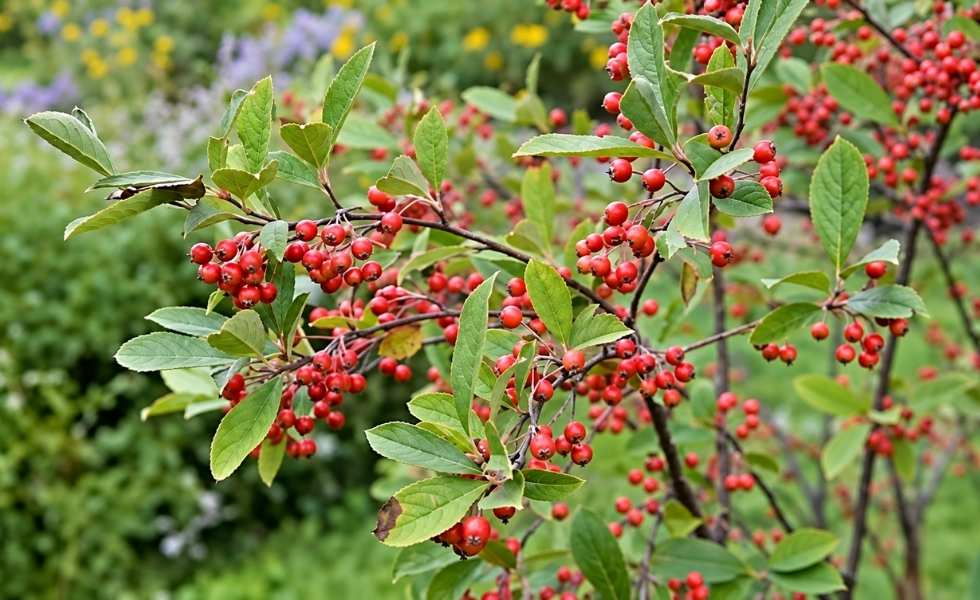
When a customer tells me that the only thing they care about is the intense October red color of burning bush, I first take them to red chokeberry, Aronia arbutifolia.
I don’t try to present it as an identical replacement, because it isn’t, but its visual effect in fall can come very close to what the customer wants. Red chokeberry produces white flowers in spring, followed by red berries, and its foliage later develops rich red tones.
A customer looks at a plant in a container and estimates the space it needs based on its current size. A much more useful question is: How much space will the plant occupy in five or ten years?
Red chokeberry tolerates different conditions, but you usually get better fall color in a location with plenty of sunlight. Virginia Sweetspire Is a Better Choice When You Don’t Have Much Space For a smaller yard, I would look at Virginia sweetspire, Itea virginica.
I find it particularly useful when a customer has an area where the soil stays moist longer after heavy rain than in the rest of the yard. Why do I find it more attractive than burning bush for small urban lots?
Compact varieties are available, which give you much better control over the plant’s final size. However, I wouldn’t plant it blindly just because it looks beautiful in October.
Virginia sweetspire can produce shoots around the main plant, so leave it enough space if you want a more natural shape. Along a neatly maintained path, you may occasionally need to remove shoots that appear outside the garden bed.
That’s why I usually tell customers to measure the width of the space they can actually give a shrub before they visit the nursery. One measurement often settles the question faster than ten plant photos on the internet.
Dwarf Fothergilla Offers More Than One Fall Color
Dwarf fothergilla, Fothergilla gardenii, stays compact enough for many residential gardens. In spring, it produces white flowers that resemble small bottlebrushes, but I consider its fall appearance more important because that’s when it earns its place on my list of burning bush alternatives.
I would particularly recommend fothergilla to a homeowner who doesn’t want to shape a shrub with pruning shears every year. Its natural form is neat, and there is usually no reason for extensive pruning if it has enough space in its original location.
Highbush Blueberry Provides Color, but Check Your Soil First
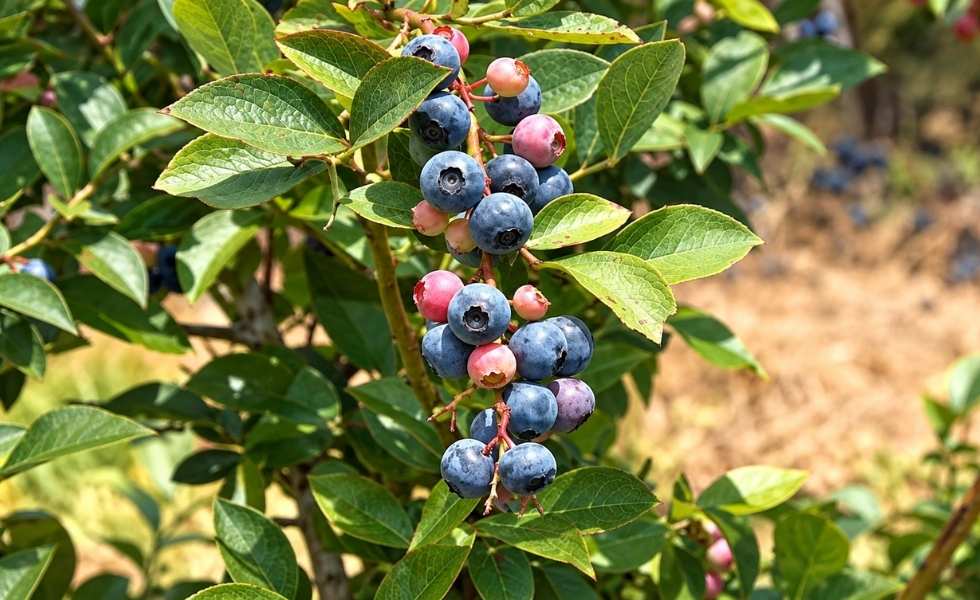
Highbush blueberry, Vaccinium corymbosum, often surprises customers when I mention it as an ornamental shrub. Most people think of its fruit first, but a healthy plant can develop very intense orange and red tones during fall.
You also get a useful plant, but there is one requirement I wouldn’t ignore. Blueberries need acidic soil. If you don’t know your soil’s pH, don’t guess.
A soil test costs much less than several plants that struggle for two years before you start to wonder why their leaves have turned yellow.
Blueberries generally prefer a pH of approximately 4.5 to 5.5. If your soil is significantly more alkaline than that range, another plant may be a simpler choice unless you’re prepared to amend the soil in advance.
If fruit production matters to you, two compatible varieties often produce a better harvest than a single isolated shrub.
Mistakes I Would Avoid When Replacing Burning Bush
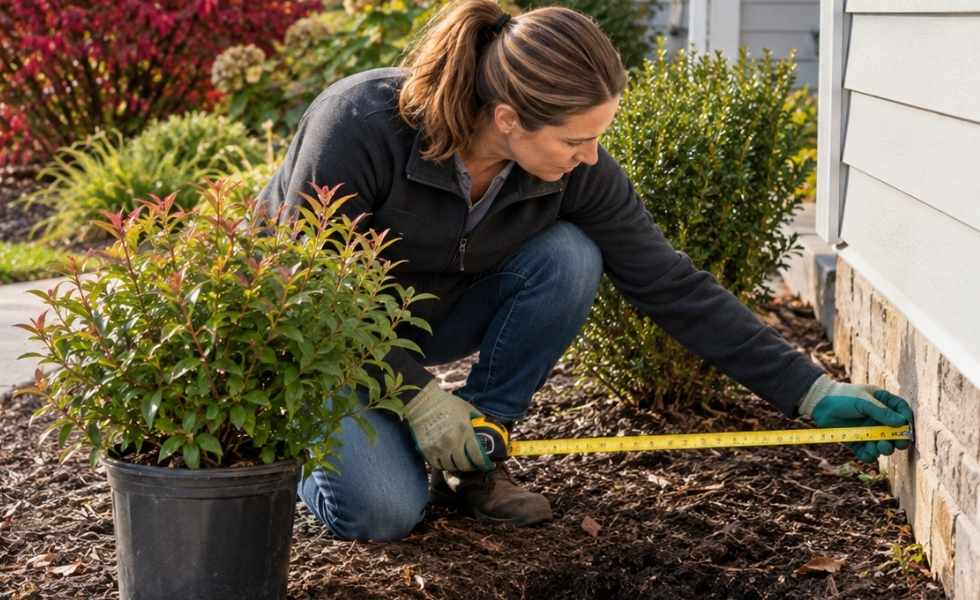
Before you buy, check:
- How much direct sunlight the location receives during the day.
- How wide the shrub can become at maturity.
- If water remains in the area after heavy rain.
- Your soil’s pH if you’re considering blueberries.
- Which USDA hardiness zone applies to your location.
One mistake is to assume you must immediately remove your existing burning bush simply because its sale is prohibited in your state. Regulations differ by location.
Massachusetts, for example, prohibits sales and distribution, but it doesn’t automatically require homeowners to remove existing plants on private property.
Another mistake is to buy the first native species you find. A native plant still needs to suit your particular site.
Fothergilla won’t solve poor drainage, and blueberries won’t thrive in alkaline soil simply because they’re a better ecological alternative to burning bush.
What I Learned While Researching the Topic
Which States Have Banned Burning Bush?
Burning bush is banned or subject to significant restrictions in several states, including Massachusetts, Maine, New Hampshire, and Vermont. Pennsylvania’s transition period for the species ended in January 2025, and Maryland added it to its list of prohibited invasive plants effective January 2026, with transition periods for existing nursery stock.
Which Plant Looks Most Like Burning Bush in Fall?
If intense red foliage is your main priority, red chokeberry is my first choice. However, its mature size requires sufficient space, so check the variety before you buy.
What Would I Plant in a Small Space?
Compact Virginia sweetspire or dwarf fothergilla make more sense than large, standard forms of red chokeberry. Your choice between them depends on the amount of sunlight and soil moisture.
Is Blueberry Really a Good Ornamental Plant?
Yes, particularly during fall, but it requires acidic soil. If the pH isn’t suitable, another species on my list will be an easier choice.
Do I Have to Remove the Burning Bush I Already Own?
There is no single rule for every state. A sales ban doesn’t automatically mean you must remove an existing plant on private property, so check the regulations in your state.
Conclusion
For years, burning bush was an easy answer whenever someone came to the nursery and asked for red fall color. Regulatory changes have shown that it is no longer a suitable answer across much of the northeastern United States.
My supplier’s response simply accelerated a decision I probably should have made earlier. Red chokeberry can provide intense red color, Virginia sweetspire is well suited to smaller or wetter areas, fothergilla offers several fall shades, and blueberries make sense where the soil is sufficiently acidic.
If you’re choosing a new shrub today, look at the location where it will grow first. When you match the plant to your soil and available space, you probably won’t miss burning bush very much.