
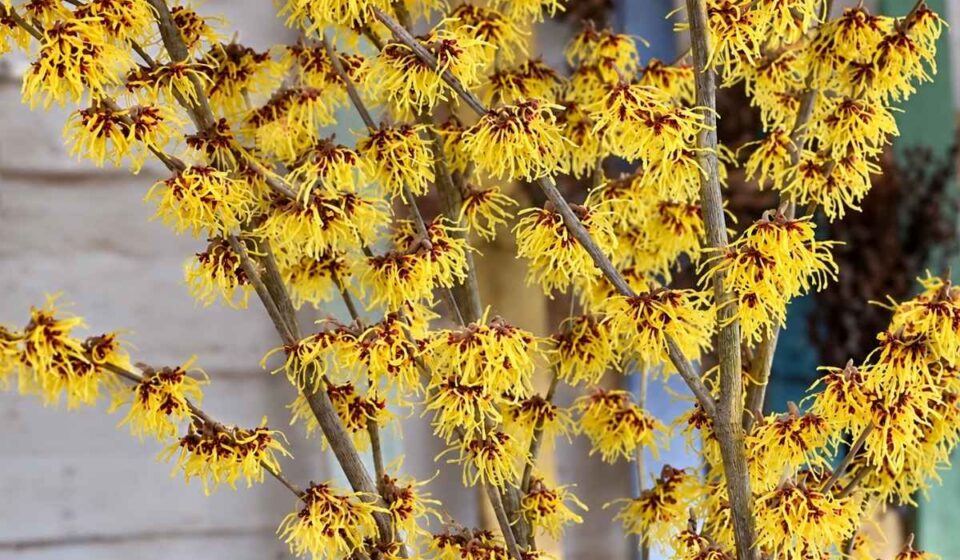
If you want flowers in your yard as early as February, plant Witch Hazel in October or November, before the ground freezes. Varieties such as ‘Jelena’ and ‘Diane’ can bloom in the middle of winter, whereas ‘Arnold Promise’ usually flowers a little later.
Fall planting gives the roots time to establish themselves in the new soil before spring, and with the right location, Witch Hazel can remain one of the most beautiful ornamental shrubs in your yard for decades.
In Pennsylvania, February is not usually a month we associate with flowering gardens, so I particularly enjoy seeing the yellow or orange Witch Hazel flowers appear on completely bare branches every year.
Its thin, curled petals resemble little strips of paper, and some varieties have a pleasant fragrance that you can notice even on cold winter days. During my horticulture studies, I was particularly interested in the seasonal cycles of woody plants.
Witch Hazel is an excellent example of how flowering periods can vary even among closely related species, which is why I recommend checking the variety carefully before making a purchase.
Here’s What I Recommend Before Fall Planting
If you plan to plant Witch Hazel this fall, pay attention to several factors that can significantly affect its development.
- Choose a winter-flowering variety. Some Witch Hazel species bloom as early as October, so they are not a good choice if you want February flowers.
- Find a sunny location. Witch Hazel tolerates partial shade, but it usually produces more flowers when it receives enough direct sunlight.
- Check the soil drainage. Its roots cannot tolerate prolonged exposure to waterlogged soil, especially during the colder months.
- Leave enough space. Many cultivars eventually develop broad crowns, so they should not be planted immediately next to your house.
- Do not expect abundant flowers immediately. A young plant must first develop a sufficiently strong root system, and the number of flowers usually increases over the following years.
Which Witch Hazel Blooms in February?
View this post on Instagram
When I choose Witch Hazel for winter flowers, I primarily focus on cultivars of Hamamelis × intermedia, a hybrid of Chinese and Japanese Witch Hazel.
Some varieties bloom as early as January, whereas others do not open their buds until spring approaches.
For yards in Pennsylvania, I would particularly recommend the following varieties:
| Variety | Flower Color | Blooming Period | Special Characteristic |
| Arnold Promise | Bright yellow | February–March | Strong fragrance and upright crown |
| Jelena | Copper-orange | January–February | Early flowers and decorative fall foliage |
| Diane | Dark red | January–March | Unusual winter flower color |
| Pallida | Pale yellow | January–March | Abundant, fragrant flowers |
| Hamamelis vernalis | Yellow to reddish | January–April | American species with fragrant flowers |
The flowering periods listed in the table are approximate, as temperatures and local climate conditions can shift the start of flowering by several weeks.
Personally, I find ‘Jelena’ one of the most interesting varieties, particularly because of its copper-colored flowers, which stand out beautifully against the dark background of evergreen plants.
However, when fragrance is my priority, I usually choose ‘Arnold Promise’, whose bright yellow flowers can remain on the branches for several weeks.
Keep in mind that Hamamelis virginiana, an American species frequently sold under the name Witch Hazel, generally blooms during October and November.
For that reason, it is not the right choice if you want flowers in the middle of winter.
Why Would I Plant Witch Hazel in the Fall?

Fall is an excellent time to plant woody plants, particularly when the soil is still warm enough for the roots to continue developing.
During my studies, I learned how important it is to distinguish between the end of the aboveground growing season and the activity of a plant’s roots.
A shrub can lose its leaves and enter dormancy, yet its roots can continue to grow as long as the soil temperature remains suitable.
With Witch Hazel, it is therefore beneficial to take advantage of moderate fall temperatures and natural rainfall.
A shrub planted in October has an opportunity to adapt to its new location before severe frosts arrive, and the following spring, it can continue developing with an already established root system.
Where Is the Best Place to Plant It?
For Witch Hazel, I would choose a sunny part of the yard with fertile, slightly acidic soil and good drainage. It prefers a pH of approximately 4.5 to 6.5, whereas highly alkaline soil can cause problems with the absorption of certain nutrients.
If you have enough space, plant it somewhere you can see it through your living room or kitchen window.
Its flowers are particularly decorative during February, when you will probably spend more time indoors than in your yard.
I would avoid completely shaded locations, as well as low areas where water collects after heavy rainfall.
How to Plant Witch Hazel Properly
When I prepare a planting site for Witch Hazel , I always try to make the hole wide enough for root development without making it unnecessarily deep.
Dig a hole approximately twice as wide as the root ball, then carefully remove the plant from its container and inspect the roots.
If you notice that the roots have started to circle around the inside of the container, gently separate them before placing the plant in the ground. Witch Hazel should be planted so that the top of the root ball is approximately level with the surrounding soil.
With grafted specimens, pay particular attention to the graft union, which must remain above the soil surface.
After planting, water the shrub thoroughly and spread a layer of mulch approximately two inches thick, but do not place it directly against the stems.
Another detail I often recommend is keeping the label with the variety name, as you may want to plant another Witch Hazel after a few years, and knowing the exact cultivar will be important.
What Happens to the Flowers When Temperatures Drop Below Freezing?
One of the most interesting characteristics of Witch Hazel is the ability of its flowers to tolerate short periods of very low temperatures.
When temperatures drop, the thin petals of winter-flowering Witch Hazel varieties can curl inward , then open again when the weather becomes warmer.
Such a response allows the flowers to survive changing winter conditions, although prolonged periods of extreme cold can still damage them.
For that reason, do not immediately assume that your shrub has been damaged if its flowers look shriveled on a cold February morning.
Will Witch Hazel Bloom During Its First Winter?
If you purchase a mature Witch Hazel that already has developed flower buds, it may bloom during the first winter after planting. However, the plant may produce considerably fewer flowers than mature specimens, particularly if it experienced stress during transplanting.
During the first year, I would pay more attention to proper watering and root development than to the number of flowers.
Throughout the following summer, check the soil moisture, especially during prolonged dry periods. Witch Hazel prefers moderately moist soil, but excessive watering can cause root problems.
You should also avoid unnecessary pruning. Witch Hazel naturally develops a decorative crown, so it is generally sufficient to remove damaged branches and shoots that disrupt its shape after flowering.
Is Witch Hazel Worth Planting If You Have a Small Yard?
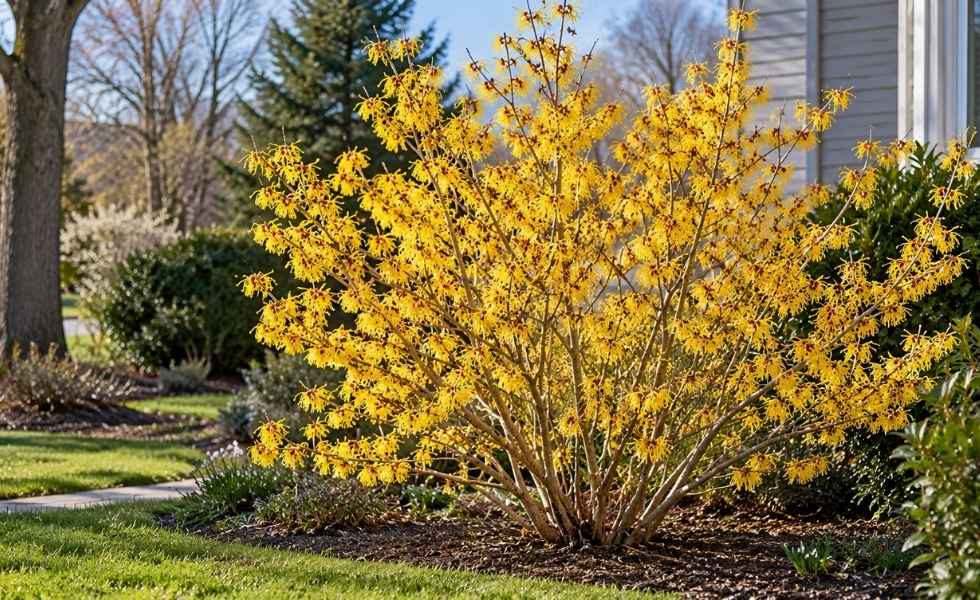
Witch Hazel can be an excellent choice for smaller yards, provided that you carefully select the variety and consider its mature dimensions in advance. Some cultivars can reach a height of 13 to 16 feet and develop an equally wide crown.
It is also worth checking whether popular ornamental plants face restrictions in your state, as with the Bradford pear in Ohio.
For that reason, I would not recommend planting it immediately next to your house or alongside a narrow garden path.
However, if you have enough space for one larger ornamental shrub, Witch Hazel offers several different decorative features throughout the year.
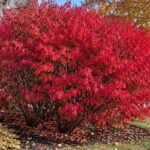
Its flowers appear during winter, it develops a dense green crown in summer, and the foliage of certain varieties takes on intense yellow and orange shades in fall.
It is precisely because of such seasonal variety that I consider it particularly interesting for yards where there is not enough space for a large number of different ornamental plants.
My Final Advice
If you plan to plant Witch Hazel this fall, do not rush into a purchase before checking the flowering period of the particular variety.
For February flowers, I would primarily consider ‘Jelena’, ‘Diane’, and ‘Arnold Promise’, with a selection that suits your local climate conditions.
Plant it in a sunny location, provide good drainage, and avoid excessive pruning during the first few years. Once well established, Witch Hazel can become one of the most interesting features of your yard, particularly during the months when most other plants are still dormant.