

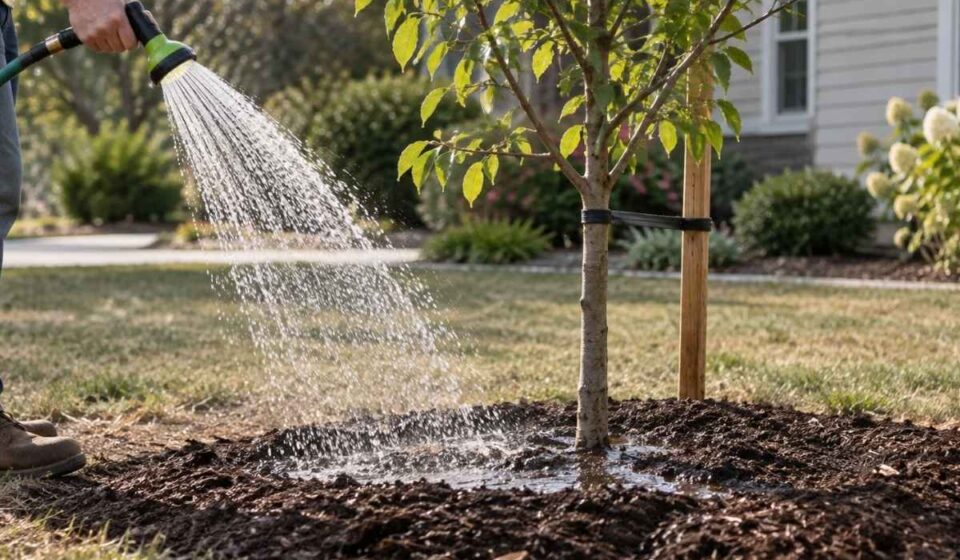
After more than 15 years of working with ornamental trees and shrubs, I still consider proper watering one of the most important parts of successful planting. A young tree can look perfectly healthy above ground, even when its root ball is already too dry. Here in Pennsylvania, I pay particular attention to the soil around newly planted specimens. Moist soil near the surface doesn’t always mean enough water has reached the roots.
If you’re wondering how often to water new trees, start with daily watering for the first two weeks. From weeks three through twelve, water every two to three days. After that, once a week is generally sufficient until the roots become established.
Treat those intervals as a starting point and adjust them according to soil moisture. I’ll explain how I would make those adjustments in a residential yard.
What I Consider Most Important
Before discussing the details, here are four recommendations I would highlight.
- First two weeks: Check the root ball daily and provide water according to soil conditions.
- First three months: Gradually increase the interval between watering sessions as roots expand into surrounding soil.
- Water quantity: Use trunk diameter to estimate the initial amount of water required.
- First year: Pay particular attention during summer droughts, even when spring growth appears normal.
How Often Should You Water During the First 12 Weeks?
When determining how often to water new trees, I use the University of Minnesota Extension guidelines, reviewed in 2026, as a useful starting point.
Their recommended schedule is straightforward. Water daily during the first two weeks, then every two to three days through week twelve. After twelve weeks, reduce the frequency to approximately once a week until the roots become established.
Iowa State University’s recommendations, updated in December 2024, suggest daily watering for the first four or five days. After four to five weeks, a thorough watering every seven to fourteen days may be sufficient if the soil has begun to dry. Why the difference?
Soil conditions have a considerable effect on how often to water new trees. Sandy soil loses moisture relatively quickly. Heavy clay holds water longer, particularly after substantial rainfall.
For a new tree watering schedule in a yard with adequate drainage, I would begin with the Minnesota recommendations and check the root ball regularly before each additional watering.
Why Newly Planted Trees Need More Water
Most container-grown trees have a large proportion of their active roots confined within the original root ball. After transplanting, new roots gradually extend into the surrounding soil.
During that early period, the tree has access to a relatively small volume of soil moisture. That limited reach also explains why recommendations for how often to water new trees change as the root system expands.
Roots also require oxygen for normal cellular respiration. Excess water can reduce air availability in the soil and interfere with root function. That’s why I include drainage checks in first year tree care, especially on properties with heavy clay soil.
How I Would Check Soil Moisture
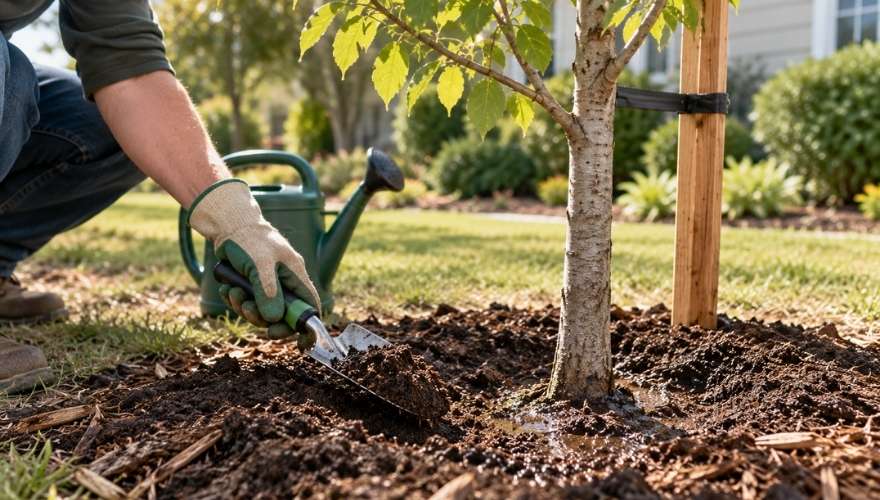
The Arbor Day Foundation’s watering guide recommends using a garden trowel to examine soil approximately two inches below the surface.
I would check near the edge of the root ball, taking care to avoid damaging the roots. The soil should feel moist and cool. If water collects in the small opening, allow the soil more time to drain.
I also use that moisture check when deciding how often to water new trees during unusually cool or rainy periods. For larger specimens, I would examine the soil a little deeper to assess moisture throughout the root zone.
How Much Water Does a New Tree Actually Need?
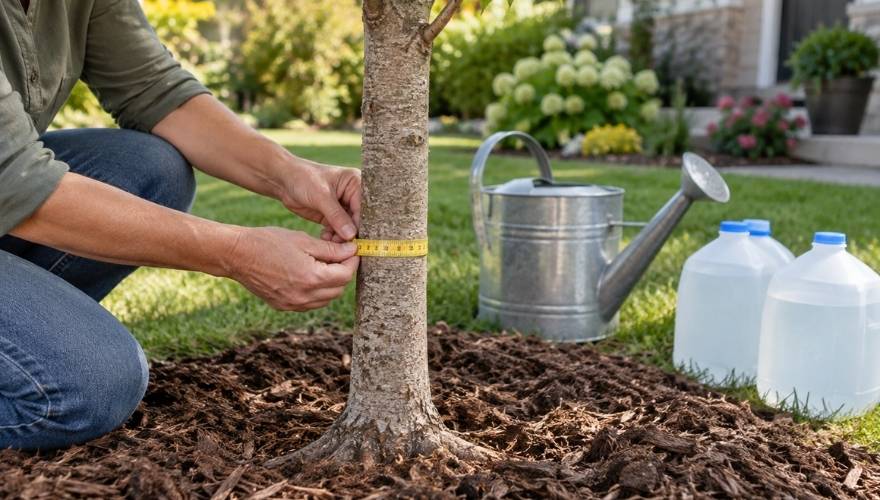
The question how much water new tree needs can be answered approximately through trunk diameter.
For trees with trunk diameters up to four inches, measure six inches above the root flare. The University of Minnesota recommends approximately 1 to 1.5 gallons per inch of trunk diameter at each watering.
Consider a newly planted ornamental tree with a trunk diameter of two inches. It would require approximately 2 to 3 gallons per watering. At three sessions per week, that equals 6 to 9 gallons, provided soil conditions justify that frequency.
When deciding how often to water new trees, I consider the volume delivered during each session. A short watering period may provide very different amounts of moisture depending on the equipment.
For how much water new tree needs, I would use the trunk diameter calculation as an initial estimate. The water volume may need to increase as roots spread farther into the surrounding soil.
A Homeowner’s Question About One Minute of Water
In a July 2024 discussion on r/arborists, an Ohio homeowner described two newly planted Autumn Fantasy maples. He had watered them daily for approximately 60 seconds with a garden hose, yet one tree appeared considerably weaker.
The watering duration alone couldn’t establish the cause. In that situation, I would first measure the hose’s actual flow rate.
If a five-gallon bucket fills in two minutes, the hose delivers 2.5 gallons per minute. A 60-second session therefore supplies approximately 2.5 gallons.
A slower hose would deliver less water during the same period. Runoff could further reduce the amount that reaches the root ball.
That simple bucket test is useful when estimating how much water new tree needs, particularly if you prefer to water manually.
Where Should You Apply the Water?
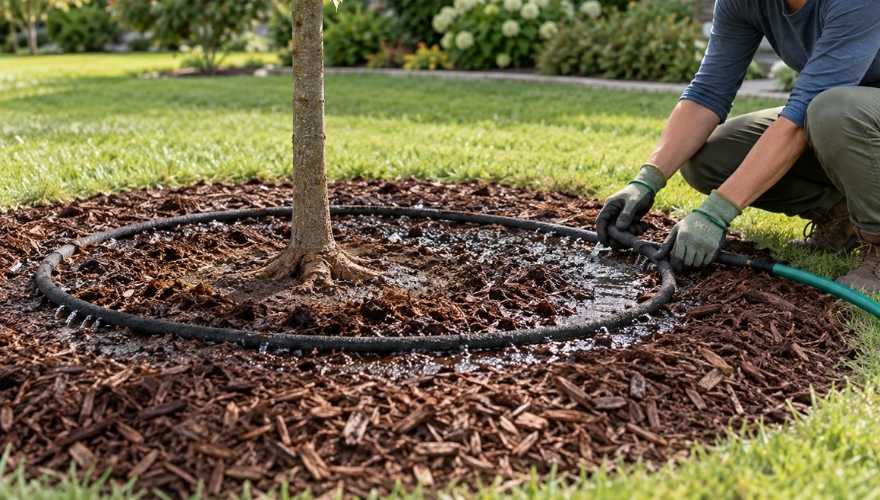
During the first few weeks, I would direct water over the root ball and immediately surrounding soil. A slow flow allows moisture to penetrate gradually.
As roots expand, the watered area should expand with them. The University of Minnesota estimates that tree roots can extend approximately 18 inches annually under Minnesota conditions.
When deciding how often to water new trees with an irrigation system, I would first check how effectively the equipment delivers water to the root zone.
- Lawn sprinklers: Check the root ball directly, since short lawn irrigation cycles may wet only the upper soil.
- Soaker hoses: Position them around the root zone and use a slow flow.
- Watering bags: Check their capacity. Some models hold approximately 14 to 15 gallons and release water over five to nine hours.
- Mulch: Maintain approximately three inches of organic mulch around the tree, leaving the root flare exposed.
I would also remove grass immediately around a new tree. Dense turf roots compete for moisture in the upper soil layers.
On compacted soil, check drainage carefully before adopting frequent irrigation.
How Often Should You Water Newly Planted Shrubs?
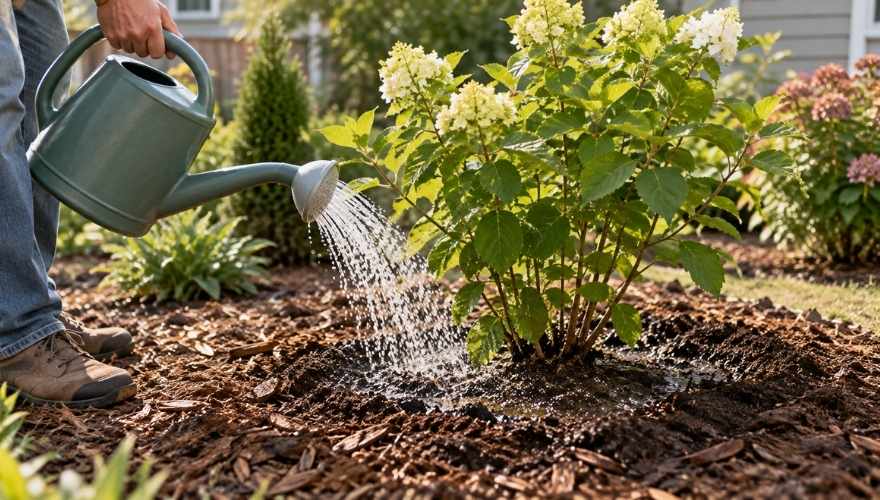
For watering newly planted shrubs, I usually begin with the container size.
A useful University of Minnesota recommendation is to apply water equal to approximately one-quarter to one-third of the original container volume.
For a shrub purchased in a three-gallon container, that means approximately 0.75 to 1 gallon per watering.
The same soil conditions that influence how often to water new trees also affect shrubs. For watering newly planted shrubs, I would begin with frequent moisture checks and adjust the interval according to the species.
Witch Hazel, for example, prefers moderately moist soil with good drainage. I discussed its establishment requirements in my article about fall planting for Witch Hazel.
Limelight Hydrangea deserves particular attention during hot weather. Its large leaves can lose considerable moisture through transpiration. New shrubs benefit from regular checks until their roots extend beyond the original container soil.
For more practical advice, watch “Best Watering Tips for Trees & Shrubs” by joegardenerTV. The video offers additional guidance on watering trees and shrubs and can help homeowners better understand the importance of proper watering after planting.
How Can You Recognize Too Much or Too Little Water?
I would examine the leaves and then check the soil before deciding what caused the problem.
The care recommendations from Johnson’s Garden Centers explain that plants in excessively wet soil may develop yellow leaves without obvious wilting. Severe moisture shortages often produce wilted foliage followed by dry, brittle leaf edges. Similar symptoms can have different causes, so soil inspection remains necessary.
When homeowners reconsider how often to water new trees after noticing yellow leaves, I recommend checking moisture around the roots before changing the schedule.
For watering newly planted shrubs, pay attention to unexpected leaf loss during July or August. Some deciduous shrubs may shed leaves after severe stress.
If a shrub develops slowly the following spring, my guide to dead or dormant shrubs explains how to examine tissue beneath the bark before removing the plant.
My Final Advice
When someone asks me how often to water new trees, I recommend beginning with an established schedule and then adjusting it according to the moisture around the root ball.
For first year tree care, summer deserves particular attention. A young tree may have healthy leaves but still depend heavily on the relatively small root system it brought from the nursery.
Keep a record of the planting date and check the soil regularly. A simple moisture check can help you decide when the next watering is necessary, giving the roots suitable conditions to establish themselves in their new location.