
Skip to content
Tree and Shrub Guide Logo Tree and Shrub Guide Tree and Shrub Guide

Plant Care | Gardening Tips

Tree and Shrub Guide Logo Tree and Shrub Guide Tree and Shrub Guide

Plant Care | Gardening Tips

  • Home
  • Shrubs
  • Trees
  • More
    • Privacy Policy
    • About Us
    • Editorial Policy
  • Home
  • Shrubs
  • Trees
  • More
    • Privacy Policy
    • About Us
    • Editorial Policy
Home/Trees/Ginkgo Trees Drop Their Leaves Almost Overnight, and a Hard Frost Usually Sets the Date
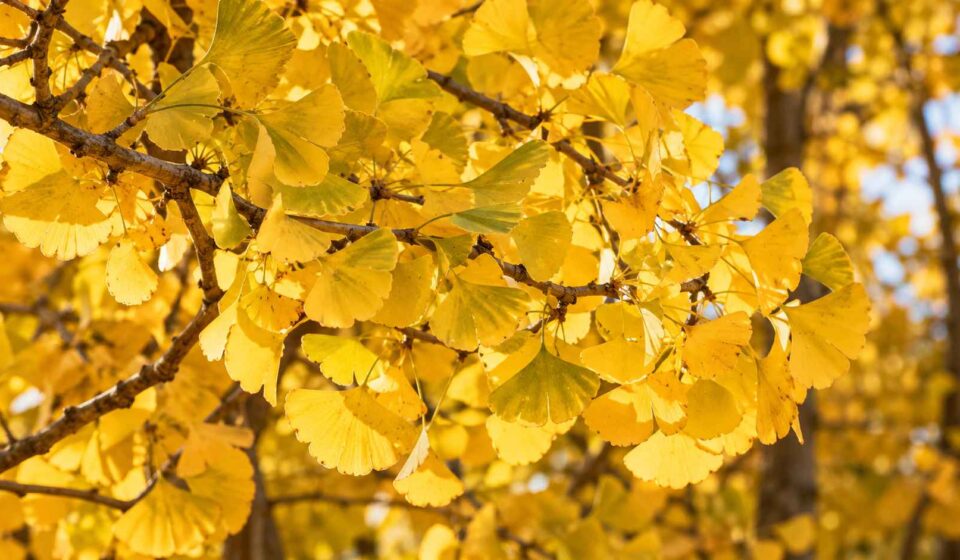
Close-up of golden-yellow ginkgo leaves on tree branches during autumn, with soft sunlight across the foliage.
Trees

Ginkgo Trees Drop Their Leaves Almost Overnight, and a Hard Frost Usually Sets the Date

Ethan Brooks
By Ethan Brooks
October 27, 2026 4 Min Read

I’ve never been much of a ginkgo fan. I know that sounds a little strange for a nursery owner, but seven years of work with plants have taught me to tell the difference between a beautiful tree and one I’d actually want in my own yard.

Ginkgo looks fantastic in October, especially when its entire canopy turns golden. I admit that even I stop to admire it. Then I remember how many leaves can end up on the ground in just a few hours.

A ginkgo tree can lose almost all its leaves in a single day, usually after the first hard frost of fall.

A special layer of cells forms where the leaf stalk meets the branch, which allows the leaf to detach. Once the temperature drops far enough, much of the canopy can lose its leaves almost at the same time.

If you have a tree full of yellow leaves in the evening and wake up to bare branches the next morning, you’ve probably just witnessed one of the most unusual fall events among deciduous trees.

Why Does Ginkgo Lose Its Leaves So Quickly?
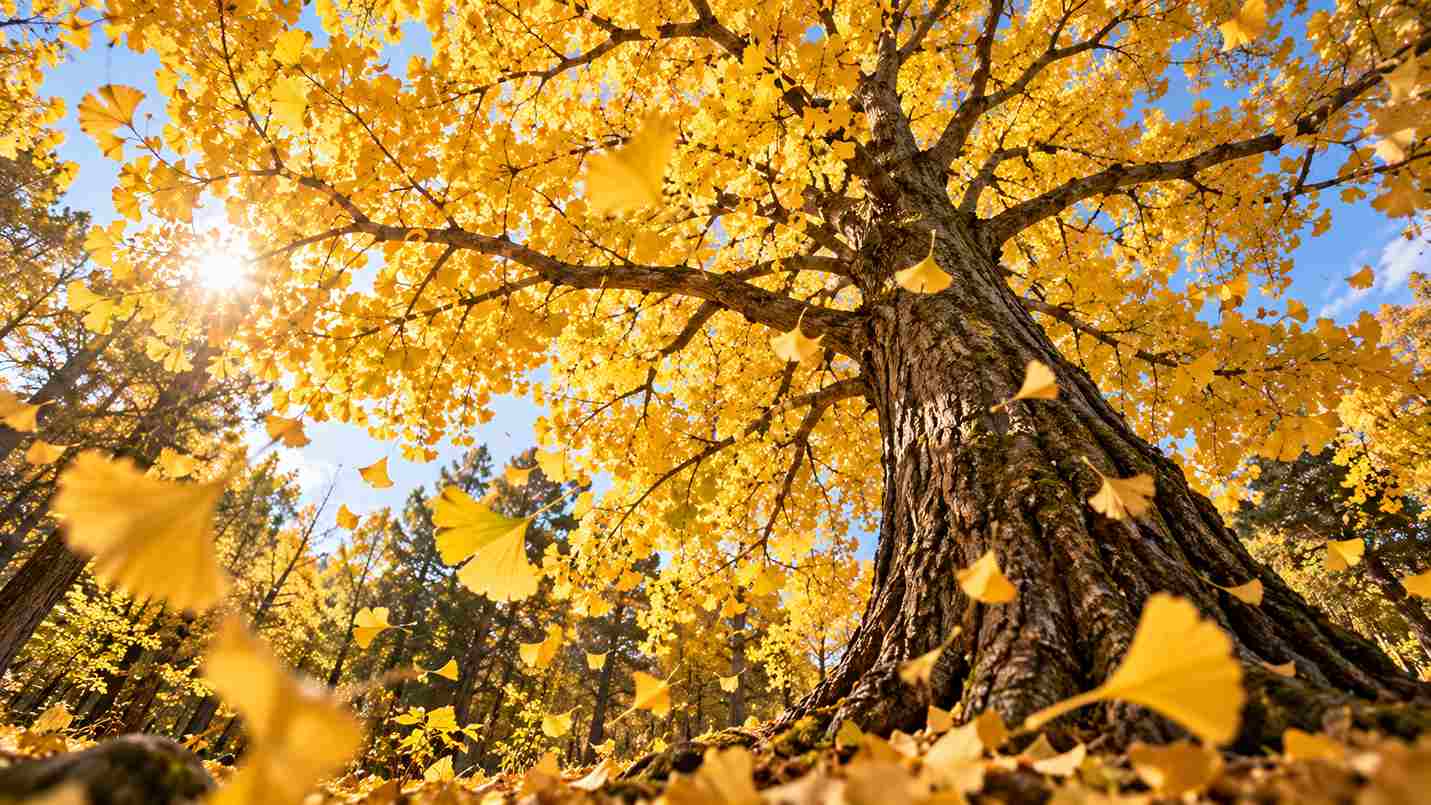
Low-angle view of a mature ginkgo tree in autumn, with golden-yellow leaves falling through the air beneath its wide canopy.
A ginkgo can spend weeks dressed in gold, only to lose much of its canopy after one frosty night. The ground beneath it may turn yellow before the morning is over.

Most deciduous species lose their leaves gradually over several weeks, so it’s easy to follow the changes in their canopies. With ginkgo, the process often ends much faster, and the explanation lies in a natural process botanists call abscission.

During fall, the tree develops a specialized layer of cells between the leaf stalk and the branch. That layer allows the leaf to detach and protects the tissue left exposed after the leaf falls.

According to experts at Purdue University, the formation of that layer is part of the tree’s preparation for winter dormancy. In ginkgo, a large number of leaves can reach the appropriate stage at approximately the same time.

Professor Serita Frey of the University of New Hampshire explains how the separation process in ginkgo can happen very quickly. Frost often provides the final push, but the tree has already gone through important physiological changes.

A Hard Frost Usually Determines When the Leaves Will Fall

 Customers at the nursery sometimes want to know the exact date their tree will change color. I can give a pretty good estimate for fall changes in Ohio, but when it comes to ginkgo, I wouldn’t bet on a particular day.

A hard frost is usually associated with temperatures around 25°F (−4°C) or lower. However, previous weather conditions and how well the tree has prepared for winter also play important roles.

An interesting example comes from the University of New Hampshire, where students have recorded the date when a ginkgo tree outside James Hall loses its leaves since the 1970s.

According to data published by New Hampshire Public Radio, in the late 1970s, that tree generally lost its leaves by October 25. During the decade before 2023, leaf drop most often occurred after November 1. In 2023, the recorded date was November 12, and in 2025, a new record was set on November 16.

Researchers associate that shift with warmer falls and later occurrences of hard frosts. Purdue, for example, documented trees in 2021 that kept their leaves despite a cold night because the separation process had not progressed far enough.

When Is Sudden Leaf Drop a Problem?

 If a healthy tree loses its yellow leaves after a fall frost, there’s no need to take any special measures. The tree is entering winter dormancy, so it doesn’t need extra fertilizer or pruning.

I’d take a different approach if the leaves started to fall in large numbers during the middle of summer, especially if I noticed branches that had begun to dry out. Prolonged drought can cause premature leaf drop, so it’s important to check the soil condition and look for other symptoms.

For a basic assessment of branch health, you can use the methods I described in my guide on how to tell if a tree is dead. For large trees with dead branches above areas where people walk, I’d recommend an inspection by a qualified arborist.

Would I Plant a Ginkgo in My Own Yard?

 Probably not, although I can see why people choose it.

Seven years of work at our family nursery have taught me that my personal preferences don’t necessarily match those of every customer, and ginkgo certainly has its advantages. For a spacious property with plenty of sunlight, it can be an excellent choice.

I still prefer trees whose fall colors last a little longer and whose maintenance requirements better suit my habits. I can appreciate ginkgo for its resilience and even enjoy the unusual sight of a tree that loses thousands of golden leaves in just a few hours.

I’d just rather watch it happen in somebody else’s yard. Especially if someone has to rake up all those leaves the next morning.

Clarify hard frost versus first frostAdd practical cleanup advice after leaf drop.

Ethan Brooks
Author

Ethan Brooks

I’m Ethan Brooks, a 44-year-old nursery owner in Ohio who has spent the last seven years learning that selling someone a tree is often the easy part. Helping them choose the right one takes a little more work. Most of what I know today comes from daily work at the nursery, conversations with customers, books, research, and plenty of talks with people who have spent far longer around plants than I have. Trees interest me for reasons beyond planting and care. I like the strange history behind certain species, the plants that fall in and out of favor, and the laws that can suddenly change what a nursery is allowed to sell. I started college but never finished my degree, so I do not present myself as a botanist or academic. I am a nursery owner who asks questions, checks his sources, and gets to see what customers struggle with every day.

Follow Me
Other Articles
A curled, weathered green-and-brown leaf clings to a thin branch
Previous

Beech Leaf Disease Has Spread to 15 States, but Yard Trees Still Have a Chance

Next

Some Oaks Hold On to Their Dead Leaves Until Spring. Botanists Call It Marcescence

Guys Behind the Garden

One nursery owner, one horticulture graduate, and a shared suspicion that “low-maintenance” plants aren’t always what they’re cracked up to be. Years around trees and shrubs have taught us a thing or two. Mostly that there’s always more to learn.

Dig Around

Fresh

  • In a Mast Year, One Big Oak Can Drop 10,000 Acorns
  • Some Oaks Hold On to Their Dead Leaves Until Spring. Botanists Call It Marcescence
  • Ginkgo Trees Drop Their Leaves Almost Overnight, and a Hard Frost Usually Sets the Date
  • Beech Leaf Disease Has Spread to 15 States, but Yard Trees Still Have a Chance
  • Deer-Resistant Shrubs for Yards Where Deer Keep Coming Back
  • How Deep to Plant a Tree (and Why Planting Too Deep Kills It)
  • How Often to Water a Newly Planted Tree or Shrub
  • The Best Time to Plant Trees Is Fall, While the Soil Is Still Warm Enough
  • When to Prune a Limelight Hydrangea (and Why Not in Fall)
  • How to Tell If a Tree Is Dead (Even in Winter)
  • Shrubs for the Front of the House That Still Look Good in Ten Years
  • How to Trim Bushes Without Cutting Off Next Year’s Flowers
  • Some States Are Banning Burning Bush. Plant These for Fall Color Instead.
  • If You Want Flowers in February, Plant a Witch Hazel This Fall
  • How to Tell If a Shrub Is Dead or Just Dormant

Get in Touch

Got a question?

[email protected]

Info

  • About Us
  • Contact Tree & Shrub Guide
  • Editorial Policy
  • Privacy Policy
  • Terms and Conditions
Favicon Three and Shrube Guide
© 2026 Tree & Shrub Guide. All rights reserved.