
I’ve been in charge of our family nursery in Ohio for seven years now, and in that time I’ve learned to recognize quite a few tree problems, often just by looking at a photo a customer shows me on their phone. But beech leaf disease has caught my attention in recent years. It was first discovered right here in our state, and the damage researchers have documented in local forests gives us plenty of reason for concern.
Beech Leaf Disease (BLD) has spread to at least 15 US states, but an infected beech tree in your yard may still have a chance to recover. Research has shown promising results with certain trunk injection treatments and products applied to leaves. Early detection is especially important, when the tree still has most of its healthy canopy.
The Disease Has Spread, but Scientists Are Finding Early Signs of Resistance
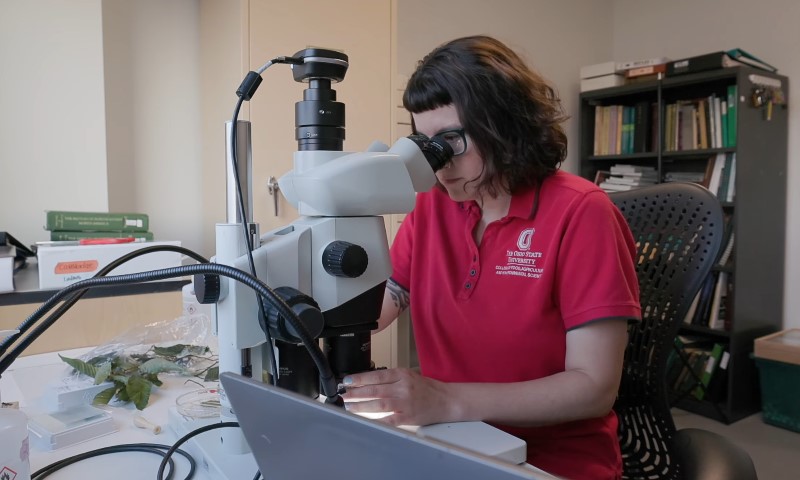
The figure of 15 states appeared in research reports throughout 2025. However, in June 2026, the USDA reported that the disease was present in Ohio and at least 15 other states. Its geographic range continues to expand, and scientists are also working to identify more reliable ways to protect trees.
I was particularly interested in research presented by scientists at Holden Arboretum on October 1, 2026. They found evidence that some American beech trees may have genetic resistance to the disease.
What Is Beech Leaf Disease, and How Can You Recognize It?
View this post on Instagram
Beech leaf disease is caused by a microscopic roundworm, or nematode, called Litylenchus crenatae subsp. mccannii. The parasite damages young leaf tissue inside beech buds, and the effects become visible as the leaves develop.
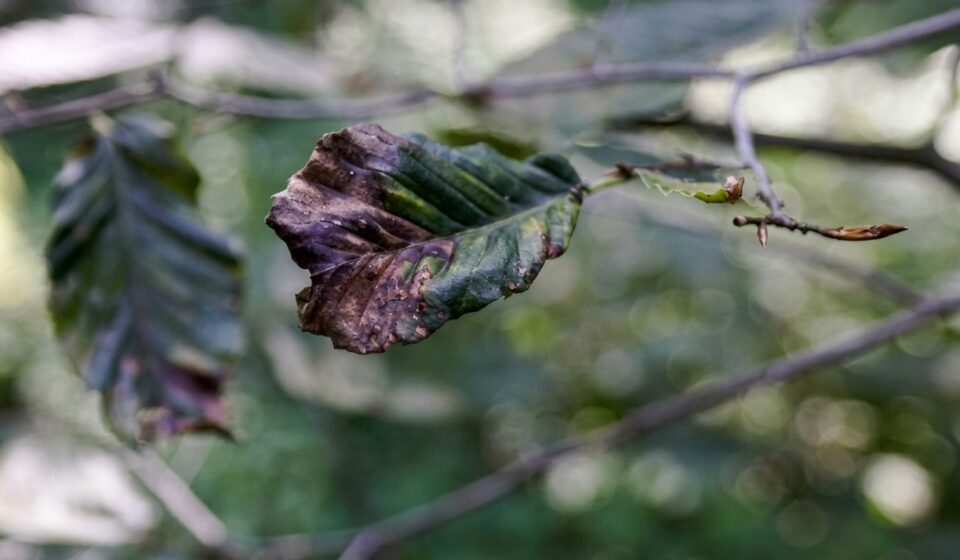
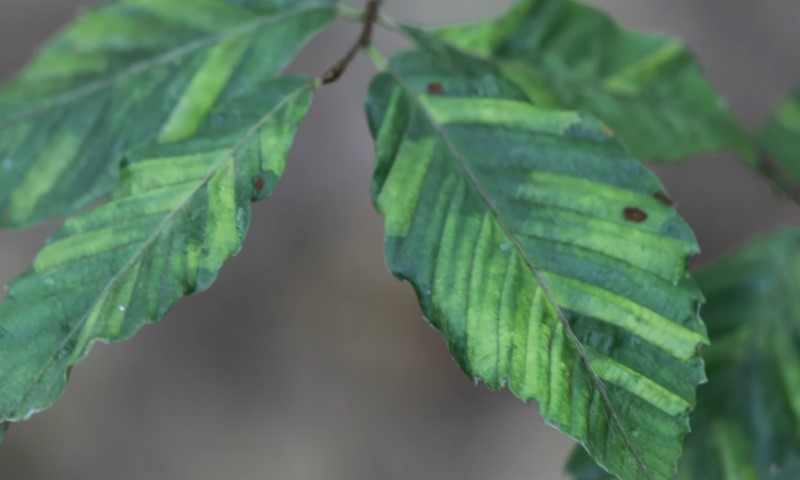
The first symptom is usually dark bands between the leaf veins. If you hold an affected leaf up to the light, the discoloration may become even more noticeable. Later, the leaves may thicken, become distorted, and curl, while severely infected trees often produce significantly fewer leaves the following spring.
It’s important to know that the disease affects American beech (Fagus grandifolia) as well as European beech (Fagus sylvatica). So the problem also affects ornamental European beech trees that homeowners plant in landscaped yards.
A 2025 study by Holden Arboretum showed just how serious the consequences can be. Scientists monitored 263 American beech trees at a research site in northeastern Ohio. Approximately 30% of the trees had died since the disease appeared in 2014, with young trees suffering particularly heavy losses.
Which US States Have Reported the Disease So Far?
The disease was first identified in 2012 in Lake County, Ohio, and appeared in neighboring states over the following years. Eventually, it reached the Atlantic coast.
More recent data have since become available. In February 2026, the European and Mediterranean Plant Protection Organization (EPPO) listed 16 US states where the disease had been confirmed.
| Region | States Where the Disease Has Been Reported |
| Midwest | Ohio, Michigan |
| Northeast | Connecticut, Maine, Massachusetts, New Hampshire, New Jersey, New York, Pennsylvania, Rhode Island, Vermont |
| Mid-Atlantic | Delaware, Maryland |
| South | Virginia, West Virginia, North Carolina |
Table: US states with reported cases of beech leaf disease, according to the February 2026 EPPO report. The presence of the disease in a state does not mean it has been confirmed in every county.
How Is Beech Leaf Disease Treated, and Which Methods Show Results?
Several methods are currently under investigation, and I found the most concrete results in a technical guide published by Rutgers Cooperative Extension. Researchers tested different chemical treatments and monitored their effects on nematode populations, leaf condition, and canopy density.
Thiabendazole, the active ingredient in Arbotect 20-S, stands out in particular. It is injected into the tree’s vascular system, and trials so far have shown a significant reduction in nematode populations inside dormant buds. In properly treated trees, the effects may last two to three years.
Rutgers recommends primarily considering the treatment for beech trees with trunk diameters greater than 10 inches (approximately 25 centimeters) and less than half of their canopy damaged. A professional is required to administer the treatment because improperly placed injections can damage the root flare and increase the risk of tree decline.
Another option is fluopyram, an active ingredient used in certain foliar treatments. Trials have shown reduced nematode populations and improved canopy density. However, applying the product evenly across the entire canopy of a large tree can be difficult, and results may also depend on the presence of infected beech trees nearby.
Researchers are also evaluating phosphite treatments. In young American beech trees with trunk diameters of approximately 5 to 10 centimeters, a five-year study showed improved tree health and less severe disease symptoms. Evidence for large, mature trees remains limited.
What Would I Recommend to Someone With an Infected Beech Tree?
Before you pay for treatment, ask an arborist to confirm the diagnosis and assess how much of the canopy is still functional. I’d also want them to explain why they selected a particular product, since researchers are still evaluating the results of some methods.
Make sure the product is approved for use in your state, too. Arbotect 20-S, for example, has special approvals for BLD treatment in certain states, including Ohio. Product registration and label instructions determine how the treatment may legally be applied.
As you consider professional treatment, several measures may also help the tree cope with additional stress:
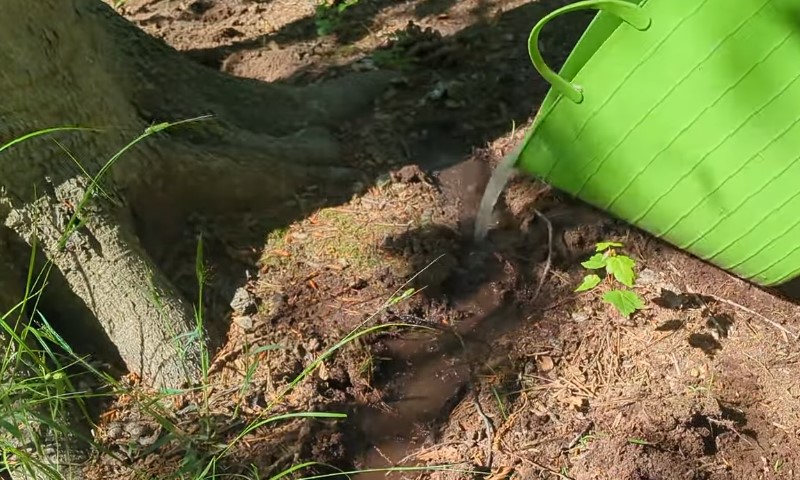
- Provide adequate water around the root zone during extended dry periods.
- Maintain a layer of organic mulch around the tree and avoid piling it against the trunk.
- Limit heavy equipment traffic and regular foot traffic on the soil beneath the canopy.
- Leave the removal of large branches to a professional, especially if there are already signs of decay or mechanical damage.
One Last Thought?
After reading the latest research, I have more reason for optimism than I did a few years ago.
Progress in treatments has been significant, and the possibility of genetic resistance opens up additional prospects for the future of American beech trees.
My advice is to watch carefully for early symptoms and request a professional assessment while the tree still has a healthy canopy. Removing a beech tree is a decision that deserves a thorough diagnosis, especially when there is a realistic chance it could continue to grow for many more years.