

I should say right at the start that hydrangeas are not plants I would claim to know every trick about. We have sold them for years. I know what they need in a yard, and I can give decent advice to a customer who needs help with a variety. Put me at a table with someone who has spent the last twenty years with hydrangeas alone, though, and I would listen more than I would talk.
By pure chance, that happened a few years ago when a customer came in for two Limelight hydrangeas and asked me when I prune mine.
“In fall, after the season ends,” I told her.
She looked at me a little longer than people usually look at a salesman who has just given them advice. “I leave mine alone until late winter.”
That was where the debate began.
My argument was simple. Limelight is Hydrangea paniculata. It blooms on new wood, so fall cuts will not remove next year’s flower buds the way they can with some hydrangeas that bloom on old wood. She agreed with me. Then she asked a question I did not have a very good answer for at the time.
“If I do not have to cut it back in October, what do I gain by the rush?”
I still think that is the best question in the whole story.
For the simplest answer, I would prune a Limelight hydrangea in late winter or very early spring, before serious new growth starts. A late-fall cut after full dormancy can be perfectly acceptable. In a colder climate, though, there is little reason to rush.
The Customer First Corrected Me on One Important Point
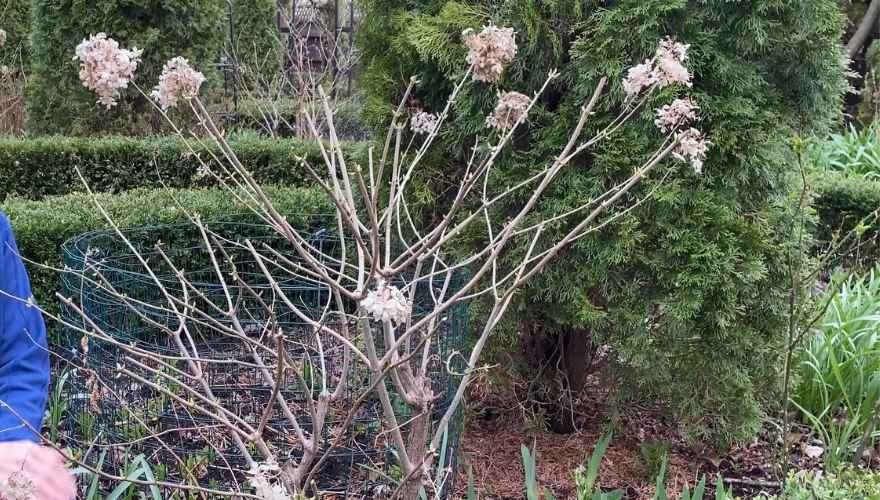
She told me she leaves the dry flower heads on the plant through winter. At the time, I saw that mostly as an aesthetic choice. If you like the dry blooms, leave them. If they bother you, cut them off.
She said she likes to see how the plant comes through winter before she decides how much to remove. If some tips suffer cold damage, she will have to assess the plant again in spring anyway.
That made sense to me, especially here in Ohio.
Later, I checked expert advice as well. Lorraine Ballato, author of Success with Hydrangeas, says Limelight can be cut back during dormancy, a period that includes late fall and winter. In areas with severe winter frost, however, she advises people to wait until spring because cold damage may occur. Her explanation of the best time for the cut matched what my customer had told me that day rather well.
“But It Blooms on New Wood,” I Told Her
I thought I had finally found the argument that would win the debate.
Limelight really does bloom on new growth produced during the same season. That makes it far more tolerant of cuts than hydrangeas that carry flower buds on last year’s branches.
The Royal Horticultural Society guide for Hydrangea paniculata recommends a spring cut of last year’s shoots back to healthy buds. Proven Winners also lists late winter or early spring for Limelight.
I told her almost the same thing.
“So if I cut it back in November, I will not lose next year’s flowers.”
“I never said you would,” she replied. “I asked why you would do it in November.”
She got me again.
A big difference exists between something you can do and the best time to do it.
Once a Limelight has lost all its leaves and entered dormancy, a late-fall cut will usually not ruin the next bloom season. The real concern comes earlier in fall, before the plant has fully finished its season. A cut at that point can prompt fresh growth that enters cold weather too young.
Then She Told Me Why She Never Cuts Her Limelights “to the Ground”
At that point, I stopped the debate and started to ask questions.
Her Limelight hydrangeas were about ten years old. She told me that during the first two or three seasons, she made the same mistake I often see other people make. Every spring, she cut them back very hard because she wanted huge flowers.
She got them. She also got stems that bent under the weight of those flowers after a serious rain.
That caught my attention because I had seen the same problem with customers. People come in with a photo of a Limelight that looks excellent in July. By August, the huge blooms have fallen in every direction.
I found very similar accounts in an old Houzz discussion about Limelight hydrangeas that flop. Tim Wood, who worked with Proven Winners plants for years, advises a lighter cut and the retention of strong older stems. A very hard cut can produce long young shoots with large blooms that fall over more easily.
If you look at the history of Limelight hydrangea in American yards, large flower heads and strong stems are part of the reason the variety became so popular.
It makes little sense to rebuild the plant every year in a way that leaves it barely able to support the feature you bought it for.
So How Much Should You Actually Cut Back a Limelight?
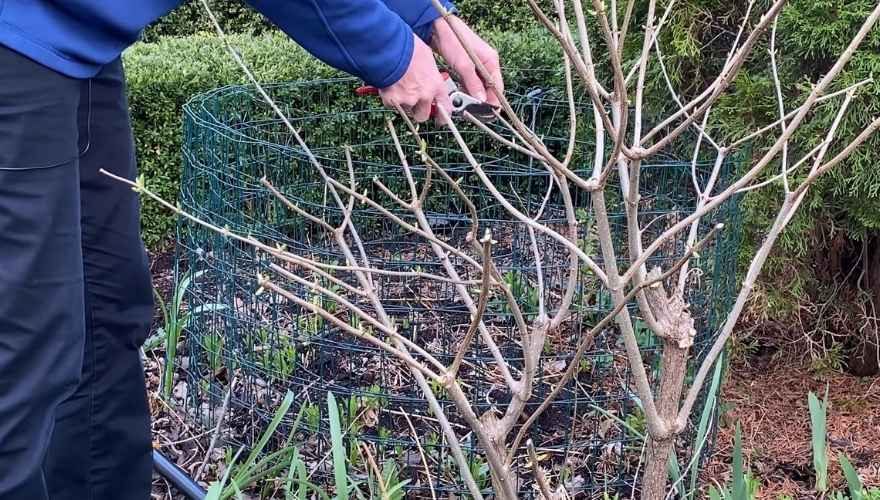
My customer told me that she first removes thin and weak shoots. After that, she looks at the rest of the plant. She had no rule that every branch had to end at the same height.
I liked that approach.
A common recommendation says to reduce the plant by about one-third. I still would not walk into the yard with a tape measure and turn every branch into a math problem. If you have a healthy, well-shaped Limelight with enough space, there is little reason to cut it back hard every year. Remove weak stems and anything that hurts the structure. Then shorten last year’s growth enough to encourage strong new shoots.
That Night, I Sat Down at My Computer Because I Did Not Like the Fact That I Had No Answer

The conversation stayed in my head all day.
It did not bother me that a customer knew more than I did. In fact, conversations like that are some of my favorite parts of the job.
That night, I sat down at my computer and checked every point we had discussed.
First, I confirmed the key fact: Limelight blooms on new wood. A late cut during dormancy therefore does not carry the same risk of flower loss that exists with some other hydrangea groups. Then I checked her claim about the best time. It turned out that both of us had part of the answer right.
I was not wrong when I said a fully dormant Limelight can be cut back in late fall. She was not wrong when she said it was better to wait. Late winter or very early spring gives you a chance to see any winter damage, keep the dry flower heads through the cold months, and make your cuts just before the new season starts.
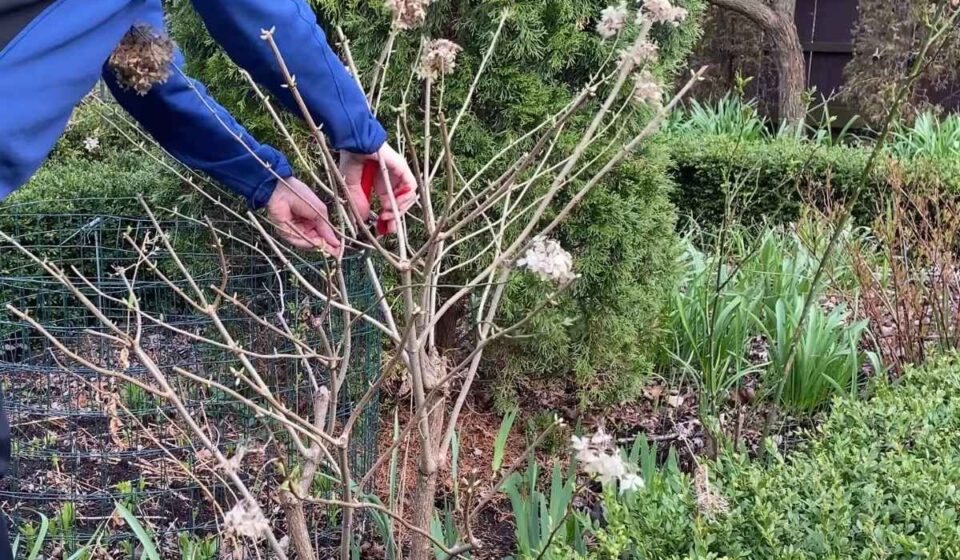
While researching, I came across a Garden Moxie videoshowing how she prunes her Limelight hydrangeas in early spring. Her demonstration highlights why timing matters and how proper cuts help maintain strong, healthy plants.
What I Tell Customers Today About a Fall Cut
If you live in a mild climate and your Limelight has lost all its leaves, I will not tell you that you made a disastrous mistake because you cut it back in late fall.
That simply is not true.
But if you ask when I would do it here in Ohio, I would wait until late winter or the first weeks of very early spring, before serious new growth starts. At that point, I can see what winter left behind and how much of the old structure I want to keep.
And the dry flower heads?
The customer in my story left hers on all winter. I often leave mine now too.