
Every spring in Pennsylvania reminds me how easy it is to misjudge the condition of a shrub. One plant may already have fully developed leaves, yet another of the same species may not even have open buds.
If you have never encountered such a situation before, it is perfectly reasonable to be unsure if you should wait or remove the plant.
Green tissue usually means a branch is alive, even if it has no leaves. I will show you four checks you can perform yourself, without any special tools. The most important part is to perform them in the correct order.
What I Consider Important
- A deciduous shrub may remain without leaves for several weeks after the start of spring.
- Green tissue beneath the bark is usually a reliable sign that the examined branch is alive.
- Branch flexibility and bud condition can help assess winter damage.
- Dead branches do not necessarily mean the roots have died, especially in species capable of producing new shoots at the base.
- The start of new growth depends on the shrub species and the conditions at its location.
Step 1: Identify Your Shrub Species and Its Expected Growth Period
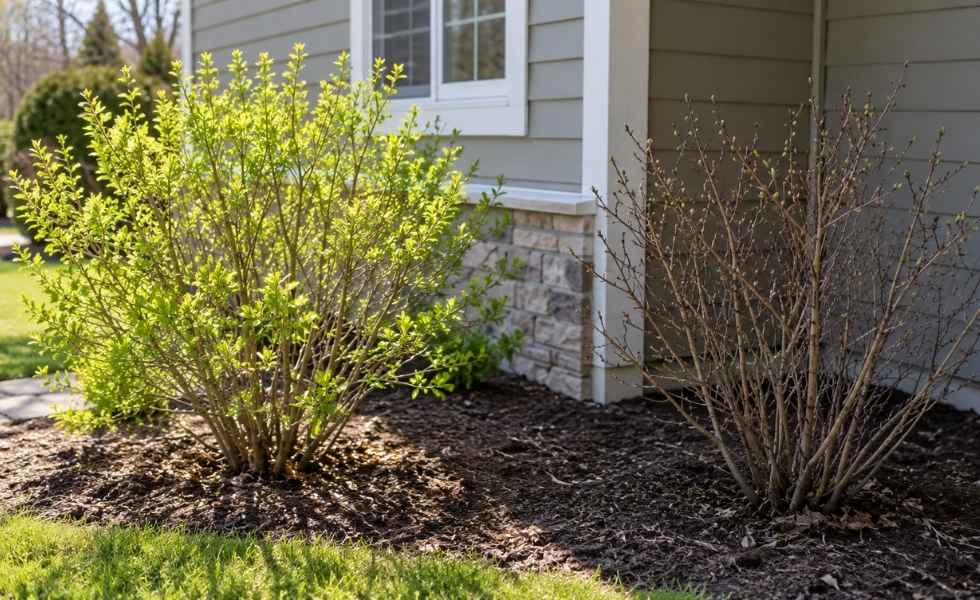
Before you perform any checks, try to identify your shrub species. For deciduous species, the absence of leaves during winter is completely normal.
However, I would not use neighboring shrubs as the only reference. Even two plants of the same variety can start to develop new growth at different times.
Horticulturist Kristina Howley provided a good example. Her two Black Lace elderberry shrubs did not start to develop leaves at the same time.
The specimen in full sun already had plenty of foliage, but the other, in a location with less sunlight, had only just started to develop buds. Soil temperature plays an important role in spring growth.
A shrub on the south side of a house may therefore start to develop new growth before an identical specimen on the north side. The situation is somewhat different for evergreen species.
The problem is particularly severe when the soil is frozen.
Step 2: Perform a Scratch Test on Several Branches
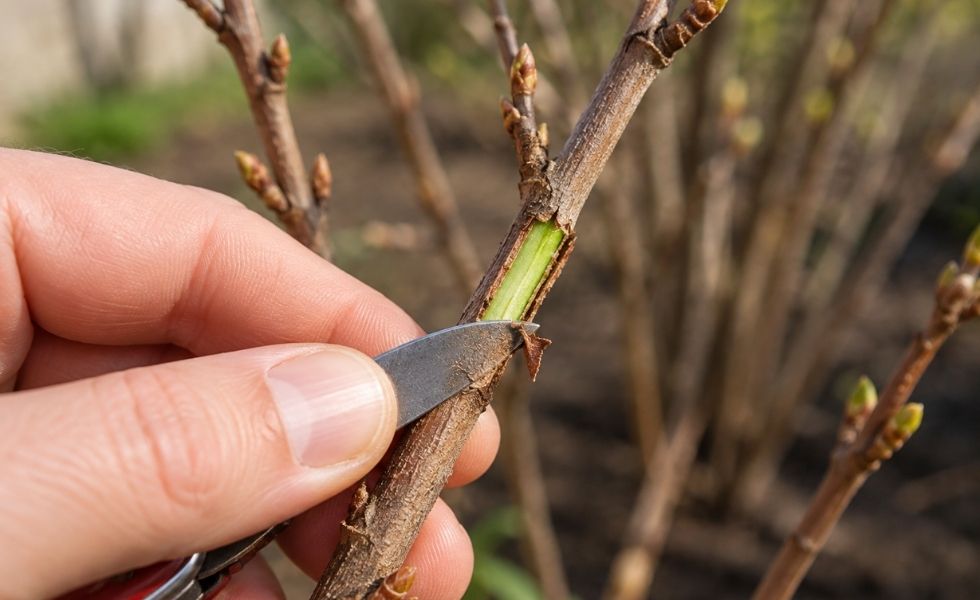
When I want to check if a shrub is alive, I first use a simple bark scratch test.
Choose a thinner branch and carefully remove a small section of the outer bark. There is no need to make a large cut.
You only need to expose the tissue immediately beneath the surface. If the tissue is green and moist, the examined section of the branch is alive. If it is completely brown and dry, that section has most likely died.
Start near the tip of one branch. If you find dead tissue, repeat the test closer to its base. Then examine another branch on the opposite side of the plant. Why is it important to examine several locations?
Frost can kill branch tips without affecting the rest of the plant. Such damage is not unusual in more sensitive species. The color of healthy tissue can vary slightly between species. It is usually green, but it may be lighter in certain plants. Pay attention to the moisture content of the tissue as well.
Step 3: Check Branch Flexibility and Bud Condition
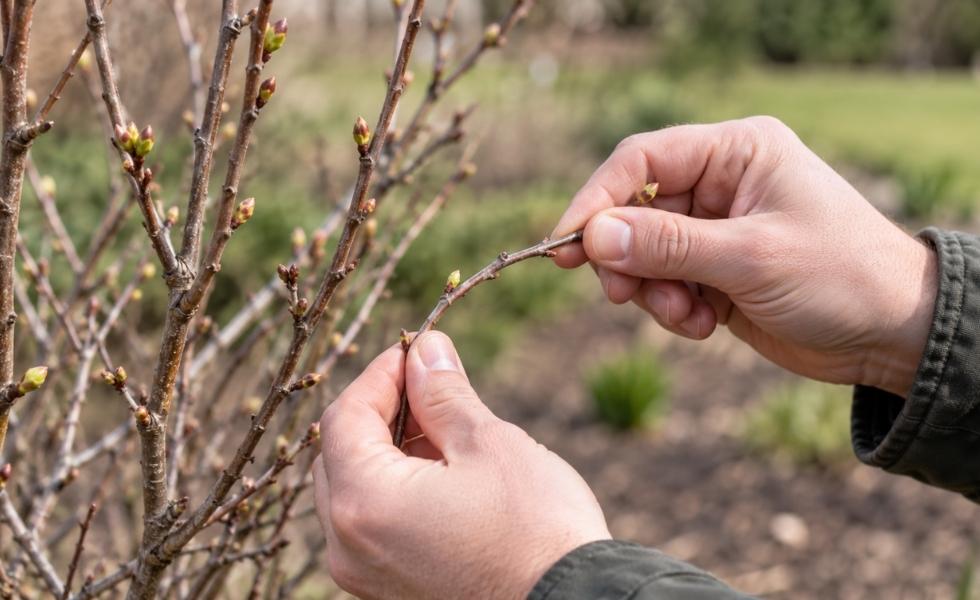
After I examine the bark, I move on to the smaller branches. A bend test can provide additional information about their condition, especially if the shrub has been exposed to low temperatures for a long time.
Choose a thin twig and hold it at two points. Bend it carefully, without sudden pressure. A living twig usually retains some flexibility. Completely dead twigs are often brittle and break easily.
However, some species naturally have fairly rigid branches even when healthy, so the result should not be assessed separately from the previous test.
What Can the Buds Tell You?
Healthy buds are usually firm and have a shape characteristic of their species. On shrubs that are still dormant, they may remain closed until suitable weather conditions arrive. If you suspect a bud is dead, carefully open one.
Its internal tissue should be healthy and show no obvious signs of dehydration. In such situations, do not rush to remove branches.
Some species can develop secondary buds, although their number and ability to grow depend on the extent of the damage.
How to Interpret the Results
The table below can help you connect the results of the previous checks. No single sign provides a completely reliable answer, so consider them together.
| Inspection Result | Possible Shrub Condition | What to Do |
| Green tissue beneath the bark | The examined branch is alive. | Wait until the expected start of new growth. |
| Dry tips, healthy thicker wood | Partial winter damage. | Preserve the live sections until new growth appears. |
| Firm buds without open leaves | Possibly normal dormancy. | Monitor development over the next few weeks. |
| Brittle twigs and dry tissue | The examined branches have probably died. | Check the condition of the stems closer to the base. |
| New shoots immediately above the soil | The plant has retained its ability to regrow. | Monitor shoot development before you prune. |
Step 4: Examine the Base of the Shrub and Watch for New Shoots
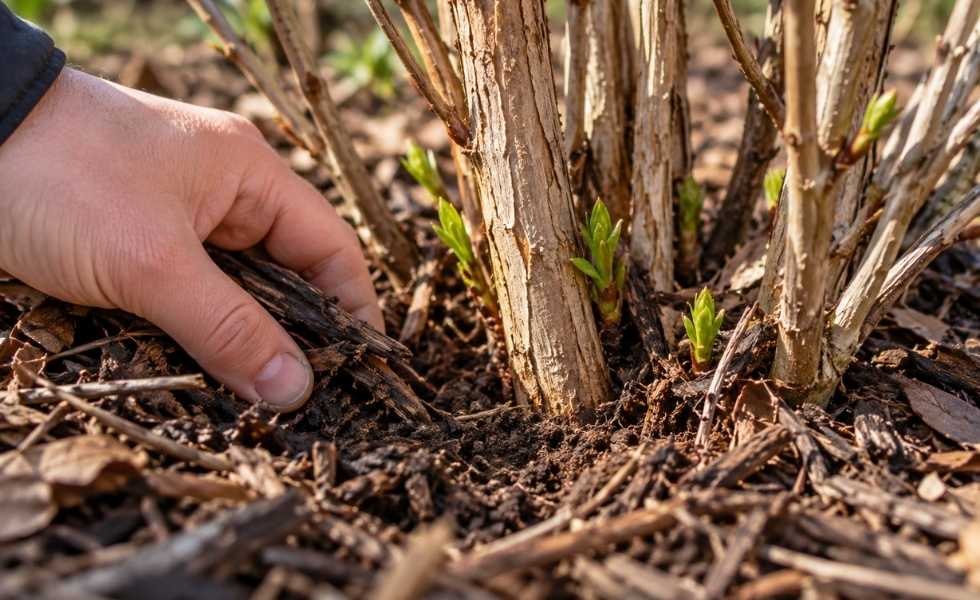
If all previous results are negative, perform the final check at the base of the shrub. Carefully remove any excess mulch that covers the lower sections of the stems.
Check the condition of the bark immediately above the soil, then make a small, shallow cut on one of the main stems. If the tissue is healthy, there is a possibility that the shrub will produce new shoots even after severe dieback of its upper branches. Such recovery is not unusual in certain species.
How Long Should You Wait Before You Remove a Shrub?
There is no universal date after which every leafless shrub should be declared dead. I remember a discussion among gardeners in which a man in Toronto described a smokebush planted in late 2017.
The following spring, the plant failed to develop leaves for months. He had already considered its removal, but the smokebush eventually developed normally.
Of course, one gardener’s experience cannot serve as a rule for every species. However, it provides a good example of why you should not make a decision based solely on the calendar.
My advice is to compare the condition of your shrub with healthy specimens of the same species in your area. If they have already been in full growth for several weeks, but your plant has no live buds, repeat the test at its base.
Where You Can Make Mistakes
Over the years, I have noticed that many homeowners make the same mistake. As soon as a shrub fails to develop leaves in spring, they try to speed up its recovery through pruning or additional care.
However, such measures can sometimes make the plant’s condition worse. I would therefore highlight the following mistakes:
Pruning too early.
After a cold winter, wait until the shrub starts to develop new growth.
At that point, you will find it easier to distinguish live branches from dead ones. Pay particular attention to species that flower on the previous year’s shoots, as excessive pruning can remove their flower buds.
The situation is different with Limelight hydrangeas . They bloom on new growth, so you can prune them in late winter or early spring.
Overwatering.
A dormant shrub usually requires less water than it does during active growth.
Before you water, check the soil moisture several inches below the surface. With newly planted shrubs, it is important that water reaches the entire root ball and that the soil has adequate drainage.
Unnecessary fertilizer application.
If a shrub is late to develop new growth, additional nutrients will not necessarily help. Wait until you have identified the reason for the lack of growth, particularly if you suspect root damage.
Fertilizer cannot restore dead tissue or solve problems caused by poor drainage.
Questions I Often Encounter
Can a Shrub Develop Leaves Again if All Its Branches Are Dry?
Yes, if its roots are still alive and the species has the ability to produce new shoots at its base. However, recovery depends on the extent of the damage and the characteristics of the particular species.
Can a Late Frost Completely Kill a Shrub?
Yes, particularly in species that are not sufficiently resistant to local winter temperatures. However, damaged leaves and buds do not necessarily mean the roots are dead.
Should You Remove All Dead Branches Immediately?
Completely dead branches can be removed once you have reliably identified the boundary of healthy tissue. With severely damaged shrubs, it is often useful to wait until new shoots develop.
Conclusion
When I assess if a shrub is dead, I pay the most attention to the tissue beneath the bark and the condition of the plant’s base.
The appearance of dry branches can be deceptive, especially after a cold winter.
Keep track of the expected start of new growth for the particular species. If healthy tissue is present, wait to see how the shrub develops before you carry out more extensive pruning.
Do not remove the entire plant until you have sufficient evidence that even its lowest sections have died.