
I admit that the Bradford Pear sales ban annoyed me quite a bit at first, especially because I own a large plant nursery in Ohio.
We had sold it for years. Customers regularly asked for it, and many came in with a photo of a tree they had seen in a neighbor’s yard and one simple question: “Do you have a pear tree like this?”
Then the state told us we could no longer sell it.
Several states now ban Bradford Pear because Callery pear can spread far beyond residential yards, cross-pollinate with other cultivars, and form invasive wild populations that displace native plants.
I did not want to keep telling customers, “That’s the law.” I sat down and reviewed regulations, scientific papers, and materials published by state agencies.
I reached several conclusions that changed my opinion of the tree. I am still not happy about the way the ban affects nurseries, but I can now see much more clearly why Bradford Pear ended up on invasive plant lists.
If you don’t have time to read everything I found, here’s what matters most:
- Bradford Pear can no longer be sold legally in several U.S. states because Callery pear can escape yards and establish wild populations.
- Ohio ended legal commercial sale after a multi-year phaseout that gave nurseries time to adjust stock.
- The issue goes beyond the Bradford cultivar because many state rules cover the full species, Pyrus calleryana.
- Different Callery pear cultivars can cross-pollinate and produce viable seed that birds can carry far beyond the original yard.
- Owners of established trees in Ohio do not have to remove them solely because new commercial sale is prohibited.
What I Hear From Customers Who Want a Bradford Pear

One April day, a man walked into my shop with a photo on his phone. Two large white-flowered pear trees stood beside an old driveway.
“I need exactly that one. Two trees.” I recognized Bradford Pear at once and told him I could not sell it anymore. At first, he thought we had no stock.
Then I explained the ban. He looked at me and said, “How can it be banned? I bought the same tree here ten years ago.”
I could not blame him. We had sold Bradford Pear legally for years. Ohio lists Pyrus calleryana as an invasive plant.
The Ohio Administrative Code bars sale, offers for sale, propagation, distribution, and import of listed invasive plants.
The special Callery pear exemption expired on January 7, 2023. The customer had one more idea.
“Could you order one for me out of Kentucky?” I had to say no again. Ohio law covers import as well as local sale. We spent almost half an hour on alternatives.
He left without the pear he wanted, but at least he left with a reason that made more sense than a blunt “not allowed.”
Why Customers Still Feel Attached to Bradford Pear
The hardest conversations involve people who remember Bradford Pear as a normal yard tree. One customer told me his father had planted three in the 1980s.
Another woman wanted the same tree she had seen outside her old school. A buyer sees a white-flowered tree in a neat yard.
A nursery owner must also think about what can happen beyond that yard. Wild Callery pear can form dense, thorny colonies in open land.
The USDA National Invasive Species Information Center also notes weak branch structure in the Bradford cultivar and a tendency for older trees to split after about 15 to 20 years.
What Changed My View of the Bradford Pear Ban
My first task was to check the plant’s history. Callery pear reached the United States in 1908.
The Bradford cultivar entered commercial sale in 1961. Federal records note that Callery pear first came to the country as part of work on fire blight resistance in edible pears. Bradford later became a major ornamental tree.
The USDA species profile gives that timeline. Original Bradford trees were clones. They could not pollinate one another, so broad seed spread once seemed unlikely.
Nurseries later added other Callery pear cultivars. A BioScience paper by Theresa Culley and Nicole Hardiman explains the key problem. Genetically distinct cultivars can cross-pollinate.
A Bradford tree near another compatible cultivar can produce fruit with viable seed.
Birds eat the small fruit and move the seed to roadsides, fields, and other open sites.
After enough time, wild pear trees appear in places where nobody chose to put them. That point changed my view more than the flower odor ever did.
I had also seen old Bradford Pear trees fail after storms. Once I read the federal note on narrow branch angles and trunk split risk, several trees I had seen over the years came straight back to mind.
One Talk With a Fellow Nursery Owner Stayed With Me
A colleague who runs a nursery a few hours away put the problem in plain language: “We sold people what they asked for.
Nobody paid enough attention to what happened beyond the fence.” I still remember that line. For decades, Bradford Pear was treated as a yard product.
The ecological problem became much harder to ignore once wild Callery pear appeared across roadsides and open land. NC State reports that wild trees can form dense thorny thickets.
Thorns can reach about 1 to 4 inches.
They can also damage tractor tires and create trouble for livestock. The practical details appear in the NC State Bradford Pear Bounty report.
Why did states wait so long? A ban affects growers, nursery stock, contracts, and customer demand. States often use phaseout periods so businesses have time to adapt.
South Carolina, for example, set a multi-year lead time before its October 1, 2024 sale ban. Clemson University explains the phaseout and the reason for it.
Where Bradford Pear Is Banned and Why the Rules Differ
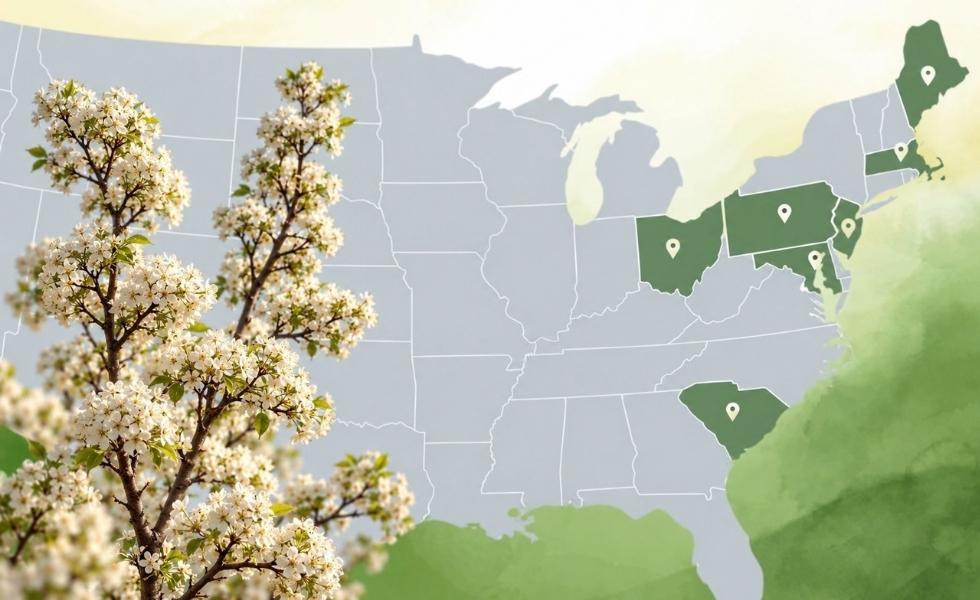
By September 2026, several states had active sale bans or major commercial limits on Callery pear.
Rules do not match across state lines.
| State | Start or phaseout date | What a buyer should know |
| Ohio | 2023 | Sale, propagation, distribution, and import are prohibited. |
| Pennsylvania | 2024 | Callery pear is on the state noxious weed list, and commercial sale is prohibited. |
| South Carolina | 2024 | Sale of all Pyrus calleryana cultivars has been prohibited since October 1, 2024. |
| Maine | 2024 | Import, export, purchase, sale, and intentional commercial propagation are illegal. |
| Maryland | 2026 phaseout | New stock faces restrictions first, with later deadlines for old stock. |
| Massachusetts | 2024 phaseout | New import and propagation are barred. Old tree stock can remain on sale until December 31, 2028. |
| New Jersey | Law approved in 2026 | The law names Callery or Bradford pear and adds restrictions in later phases. |
Why the Ban Still Bothers Me
A nursery cannot change stock with one click. You buy or produce a tree months or years before a customer sees it.
You pay for labor, irrigation, space, and care. A new restriction can turn a familiar product into stock that no longer has a legal route to sale.
I no longer think the ban lacks a solid reason. My frustration now sits elsewhere. States should give nurseries clear notice and enough time to shift stock before a deadline arrives.
How Much My Nursery Lost After the Bradford Pear Ban
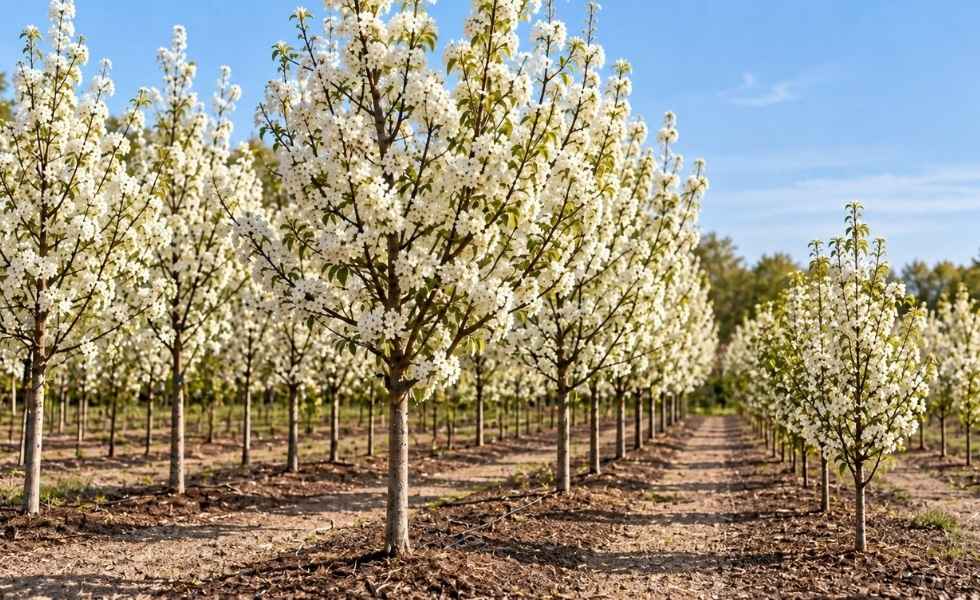
I did not have hundreds of Bradford Pear trees left when the Ohio deadline became real. I had enough to feel the loss.
About 30 trees of several sizes were still part of my normal seasonal stock. My expected average retail price was around $75 per tree.
The math was simple: 30 trees × $75 = $2,250 in potential sales I did not lose $2,250 in pure profit. Part of that amount covered stock cost, irrigation, labor, and space.
The bigger problem was the need to replace a tree that customers already knew by name. A colleague had a much larger inventory before his own phaseout deadline.
His first reaction matched mine: “Why now?” After several seasons, the answer looks clearer. Every additional year of commercial sale can add more seed sources to the landscape.
My Advice if You Already Have a Bradford Pear or Still Want One
After hundreds of customer talks, I give much firmer advice now:
- Check your state rule before you buy. An online ad does not prove that a tree is legal at your address.
- Do not use another Callery pear cultivar as a loophole. A state rule may cover all of Pyrus calleryana.
- Inspect an old tree carefully. Large forks, cracks, or prior storm damage deserve attention.
- Check the land near your yard. Young wild pears nearby can point to seed spread.
- Plan a replacement before removal. Serviceberry, native fringetree, or another suitable native tree can fill a similar ornamental role.
The University of Maryland Extension lists serviceberry and native fringetree among alternatives with white flowers.
North Carolina also uses a different approach. The Bradford Pear Bounty program gives eligible participants a native tree after removal of a Bradford Pear.
Since its 2022 launch, the program has held 18 events and replaced more than 3,000 trees by April 2026.
Program coordinator Kelly Oten gave the idea a very practical summary: “every tree removed is one less seed source”.
As a nursery owner, I like that model. A customer loses one option, but gets a clear alternative.
What I Tell Customers Now
Bradford Pear is the clearest example I have of how a familiar nursery product can become a problem years later.
I was annoyed when it disappeared out of my inventory. After the research and many talks with people who deal with wild Callery pear, my view changed.
States still owe nurseries clear notice before major rule changes.
When a customer now walks in with a photo of a white-flowered pear and says, “I want exactly that one,” my answer is easy: “I cannot sell you Bradford Pear.
Let me show you a tree you will still be happy with ten years later.”