
Limelight Hydrangea now looks like an established American garden classic, yet its rise began with a Dutch cultivar that many buyers initially found unusual.
Green flowers were a difficult sell at a time when people expected hydrangeas to bloom in familiar shades of blue or pink.
Its popularity grew after homeowners saw how reliably it bloomed in cold climates and how well its large form worked beside American houses.
A national nursery network then turned a promising cultivar into one of the most recognizable shrubs in residential landscapes.
The Dutch Cultivar That Changed American Hydrangeas
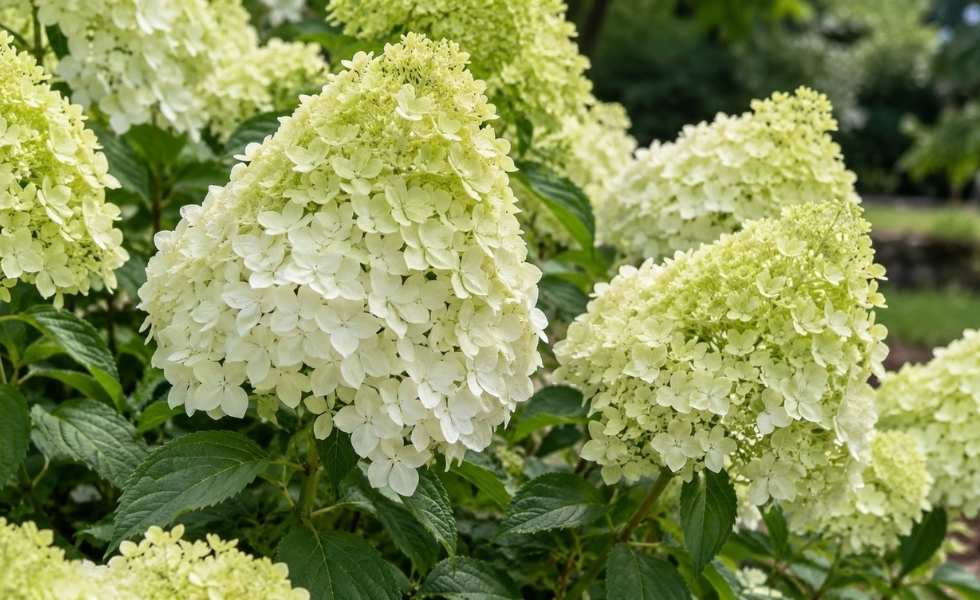
Pieter Zwijnenburg Jr. selected the original Limelight plant in Boskoop, Netherlands, in 1986. Its pale green sepals set it apart from other hydrangeas, while its large flower clusters remained upright on firm stems.
Dale Deppe and horticulturist Tim Wood later encountered the cultivar during their search for European shrubs with potential in the American market.
A United States plant patent for Limelight followed in August 2002 and recorded its distinctive color, flower size and upright structure.
He still believed the cultivar had commercial potential.
Mature displays eventually made a stronger case than young nursery plants could. Once covered in large green and cream flower clusters, Limelight had enough visual weight to affect the appearance of an entire front yard.
Reliable Flowers Made Limelight Easier to Trust
Many traditional bigleaf hydrangeas form flower buds on older stems, which leaves the next display vulnerable to winter damage.
Limelight develops flowers on new wood produced in the current season, so damage to old branch tips does not usually remove the entire bloom cycle.
That difference mattered in northern states, where a hydrangea could survive winter and still produce very few flowers
Panicle cultivars offered more predictable results, which gave homeowners and landscape professionals greater confidence in the plants they selected.
Limelight also accepted more direct sun than many people associated with hydrangeas.
The official cultivar information places it in USDA zones 3 through 9 and recommends full sun or part sun, with afternoon shade preferred in warmer climates.
Its Size and Color Worked Beside American Homes
A front yard shrub needs enough presence to affect the view of the house, yet its shape must still fit around windows and paths.
Limelight met that need because the original cultivar commonly reaches 6 to 8 feet in height and can develop a similar width.
Its flower clusters may measure 6 to 12 inches long, which keeps the display visible at street distance.
The dimensions come from the North Carolina State Extension plant profile, which also notes that the firm stems can support large flowers after heavy rain.
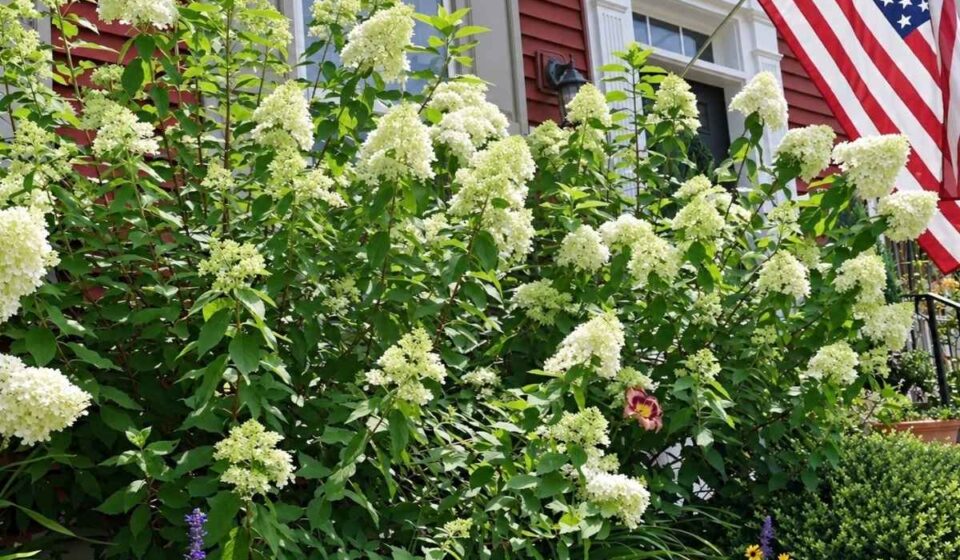
Pale flowers suited red brick and white siding, while gray stone provided an equally useful background.
Homeowners could add a substantial flower display without changing the rest of the front yard around a difficult color.
Tree forms widened the design options because the raised crown provided height near porches and entrances without occupying as much space at ground level.
Standard shrubs remained more suitable for broad foundation beds and informal screens.
National Distribution Turned It Into a Familiar Choice
A successful cultivar cannot become a national favorite if buyers cannot find it. Spring Meadow introduced Limelight through the ColorChoice shrub line, while its later relationship with Proven Winners placed the plant within a broad garden center network.
Homeowners across different states could ask for the same named cultivar and receive similar information about its mature size.
Landscape designers also began to use it beside driveways and entrances, giving potential buyers a chance to see established plants outside nursery catalogs.
Repeated exposure helped Limelight become familiar rather than unusual. Once homeowners could recognize the cultivar in nearby yards, green flowers no longer looked like a risky choice.
Popularity Also Revealed Its Main Limitation

Attractive photographs often hide the amount of space an original Limelight needs. A young plant can fit below a low window for the first season, but its natural size may create a constant need for cuts later.
Narrow beds are better suited to compact cultivars such as Little Lime or Limelight Prime.
Annual cuts are best made near the end of winter before active growth resumes.
The University of Minnesota guide to hydrangea cuts recommends a cut just above a full bud for panicle hydrangeas.
Excessively severe cuts can produce oversized flowers on stems that bend after heavy rain.
Poor drainage presents another risk, since Limelight needs moist soil but does not perform well where water remains around the roots.
Frequently Asked Questions
How can Limelight Hydrangeas create a more elegant entrance?
Place one tree form on each side of the entrance when the facade is symmetrical. For an asymmetrical house, use a single tree form near the wider side of the porch and balance it with a lower group of shrubs.
Which plants look good beneath Limelight Hydrangeas?
Low boxwood creates a formal border, while catmint adds a softer edge without hiding the hydrangea stems. Dark green ground cover can also provide contrast beneath the pale flowers.
Should Limelight Hydrangeas match on both sides of the house?
Matching plants work well with traditional homes that have balanced windows and a central entrance. Modern or cottage style homes often look better with one larger group placed where the facade needs visual weight.
How can Limelight Hydrangeas look natural instead of overly formal?
Combine them with plants that have looser shapes and different leaf textures. Leave enough open space around each shrub so the flower clusters remain visible rather than crowded by nearby plants.
Conclusion
Limelight Hydrangea won over American front yards because it offered dependable flowers in regions where other hydrangeas often produced inconsistent results. Its large form could fill an empty foundation bed, while the pale color sequence worked beside many styles of home.
National distribution placed the same cultivar in garden centers across the country, and mature examples showed buyers what young nursery plants could become.
Garden blogs then helped turn a successful landscape shrub into a recognizable American front yard trend.
The popularity remains deserved, provided the plant receives enough space. When its mature width suits the location, Limelight can deliver the substantial summer and autumn display that made it famous.